
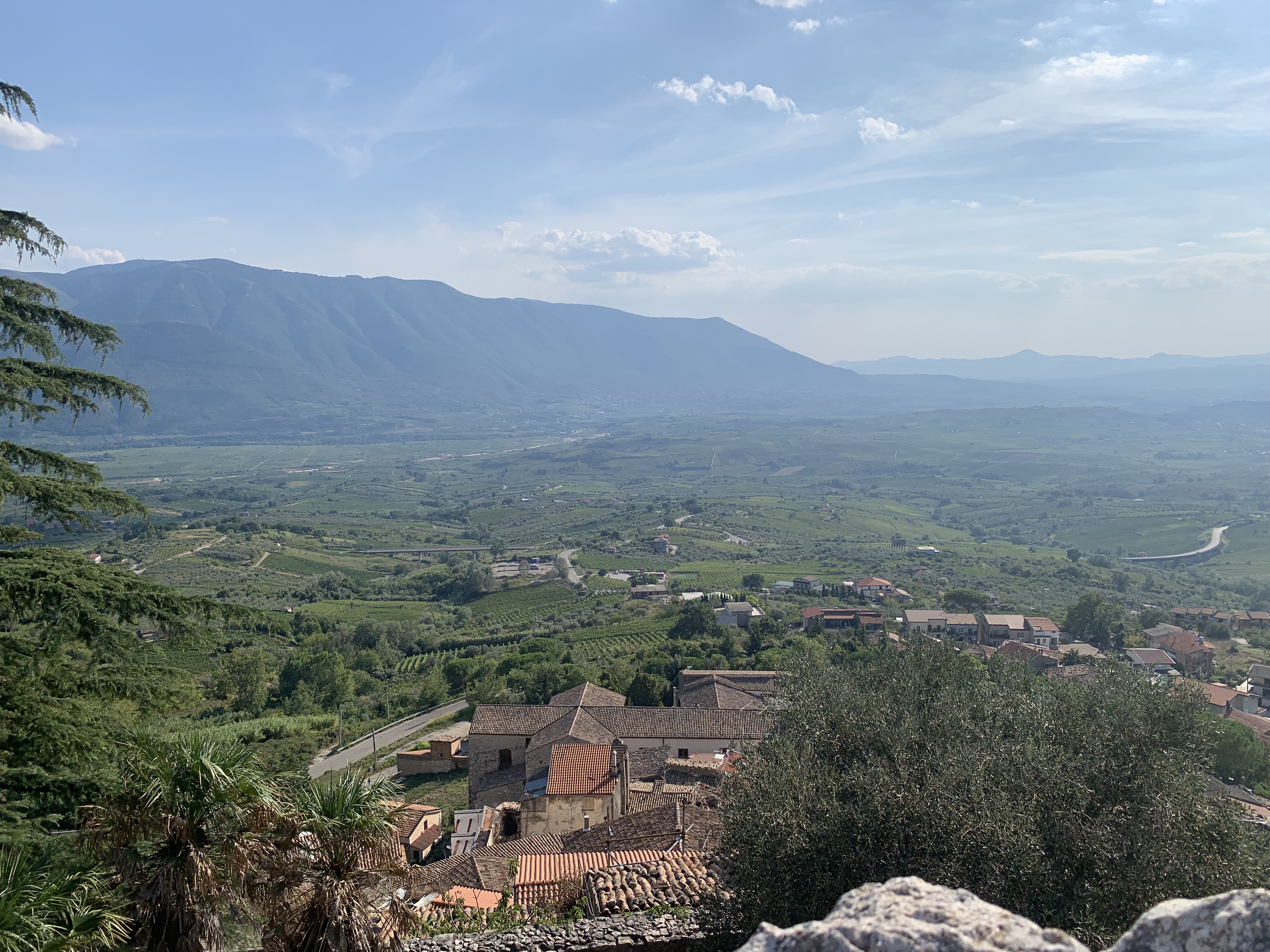
When the Romans ruled the world, the region of Naples – Campania – was the breadbasket for the Empire. No mistake then that Pliny the Elder (who actually died in the eruption of Vesuvius at nearby Pompeii!) called it Campania Felix, or the happy countryside. The fertility of this land and its bounty are readily apparent even today, in the fabulous food and wine that come from here.
On a recent trip to Campania we started out, quite obviously, in the region’s capital city: Naples, Bella Napoli! My American companions on this adventure couldn’t wait to get their hands on a sfogliatella or a babà al rhum, a slice of pizza or a gelato!

When it comes to sweets, Neapolitans are like their Sicilian cousins: they don’t fool around!
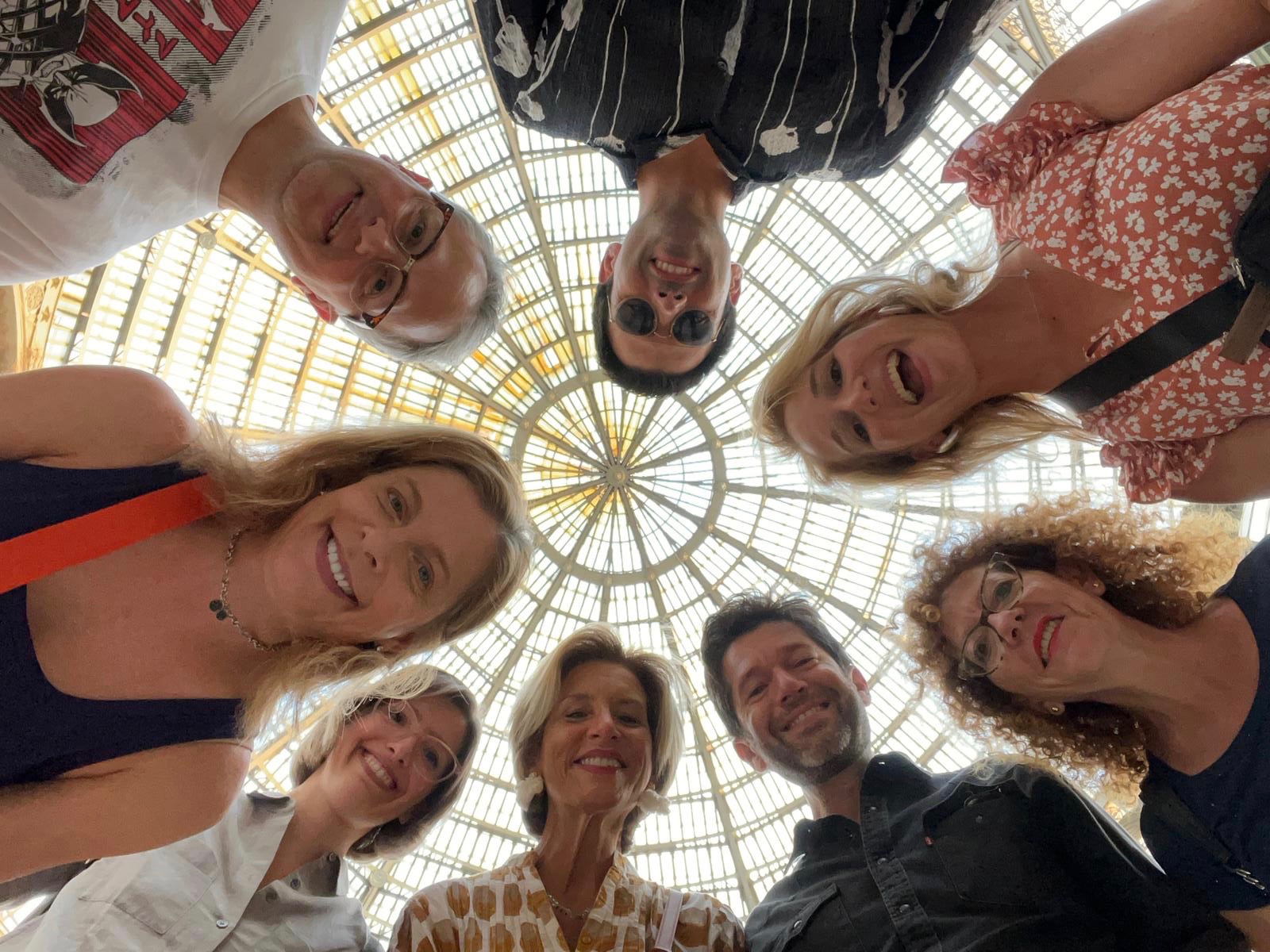
Coffee is another specialty of Naples, as the display of pots here at world-renowned Gran Caffè Gambrinus demonstrates. The Neapolitans like their coffee sweet and have a ritual preparation with sugar to make the cuccuma, the sweet creamy part!
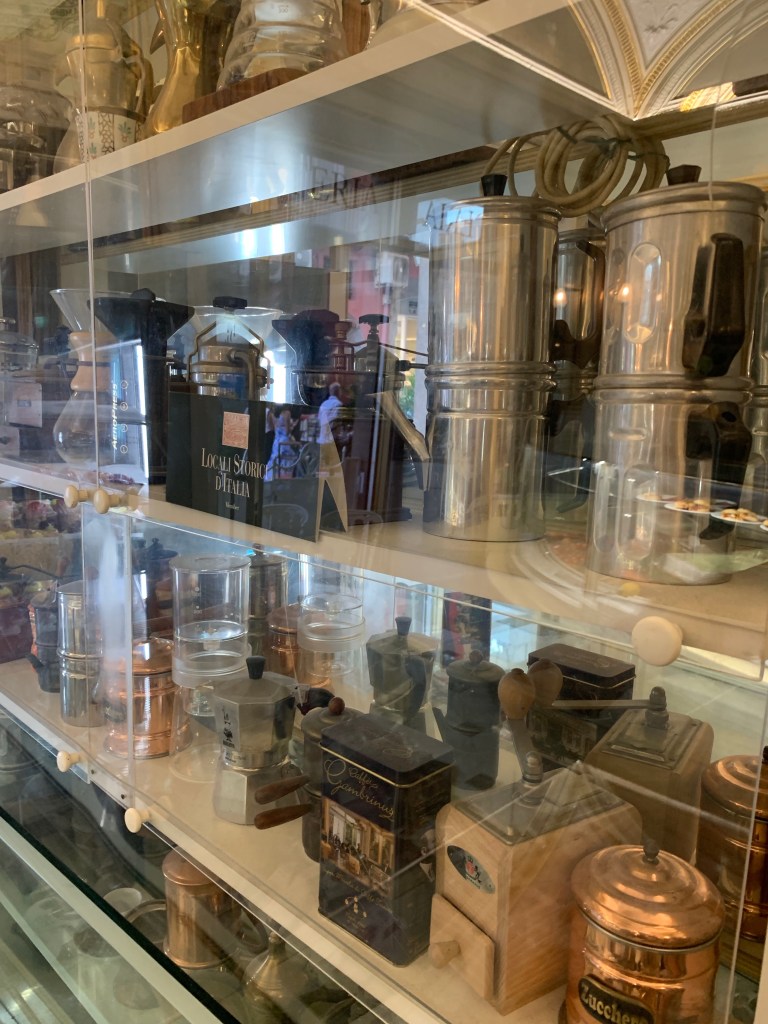
But I digress…
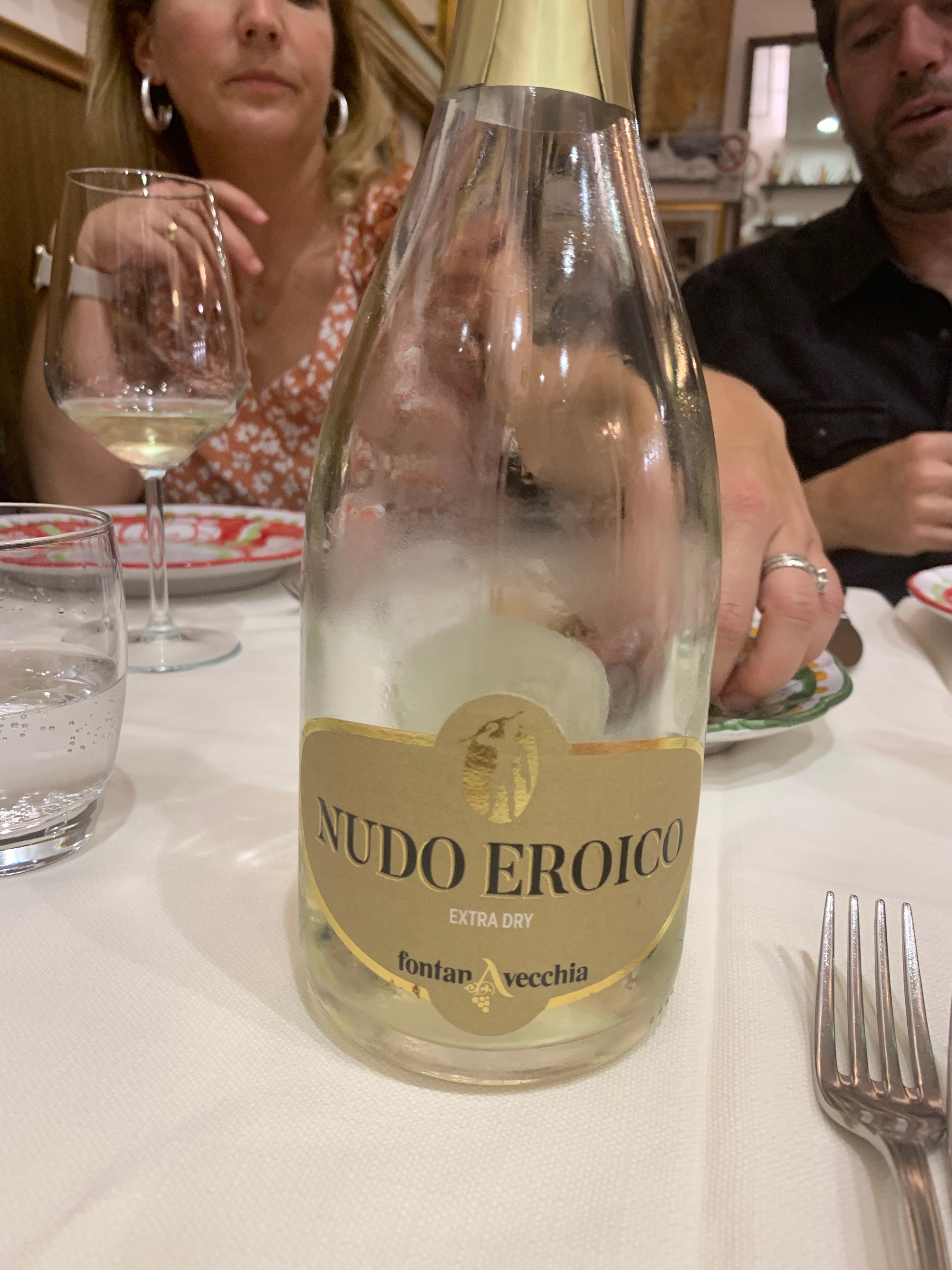
When a press trip starts off with a wine called Nudo Eroico (i.e. heroic nudity, translator’s note!) you have no idea how you are going to wind up! Our inaugural dinner featured this sparkling Falanghina wine produced by the President of the Consorzio del Sannio, Libero Rillo (a tongue-twister of a name!) whose family owns the Fontana Vecchia winery.
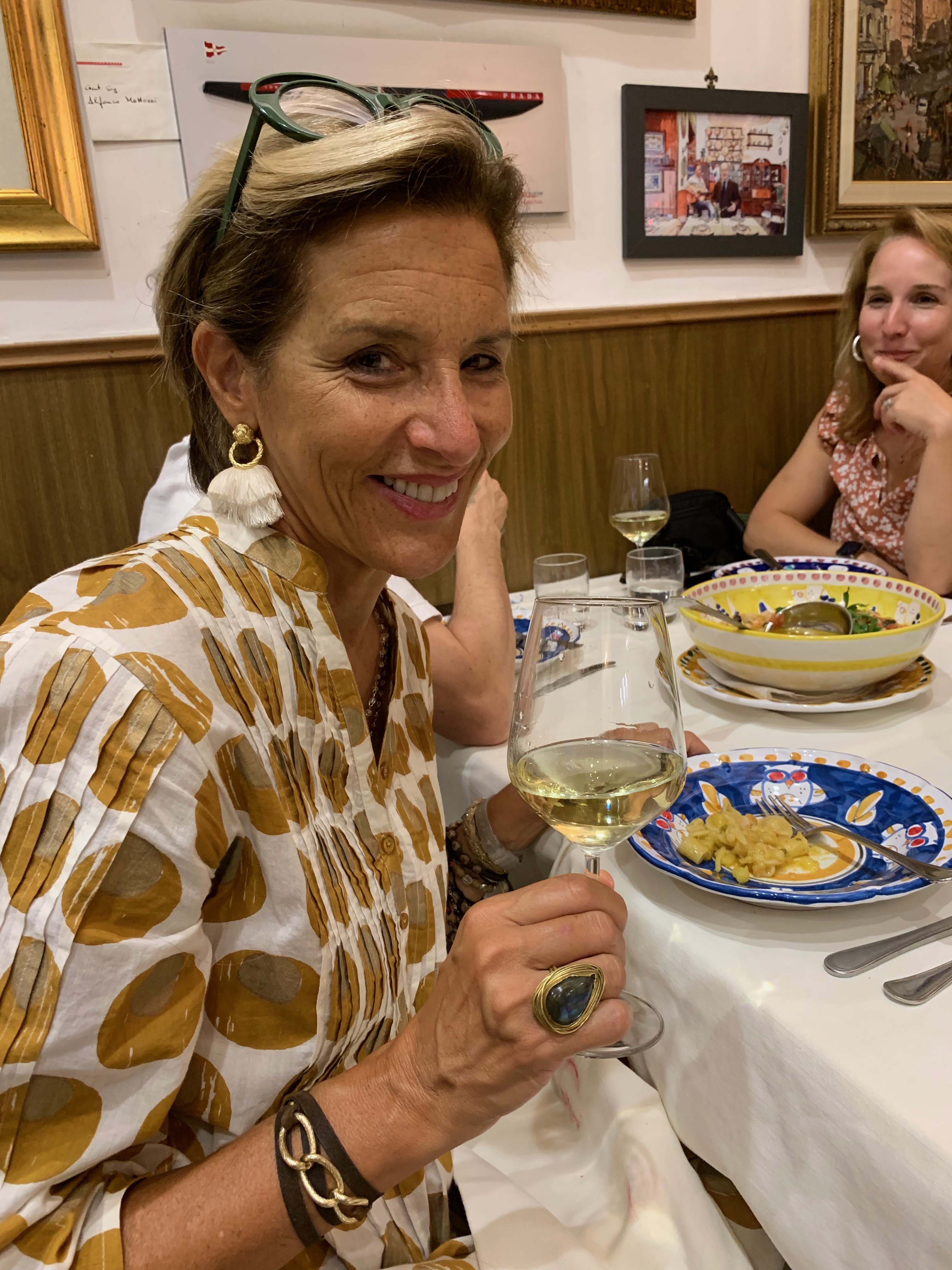
On a trip like this, one understands the meaning of the Italian phrase, Pancia mia, fatti capanna! Or, Oh tummy of mine, make yourself like a big shed – in other words, take in as much food as you can because it’s all delicious and there’s a ton of it!
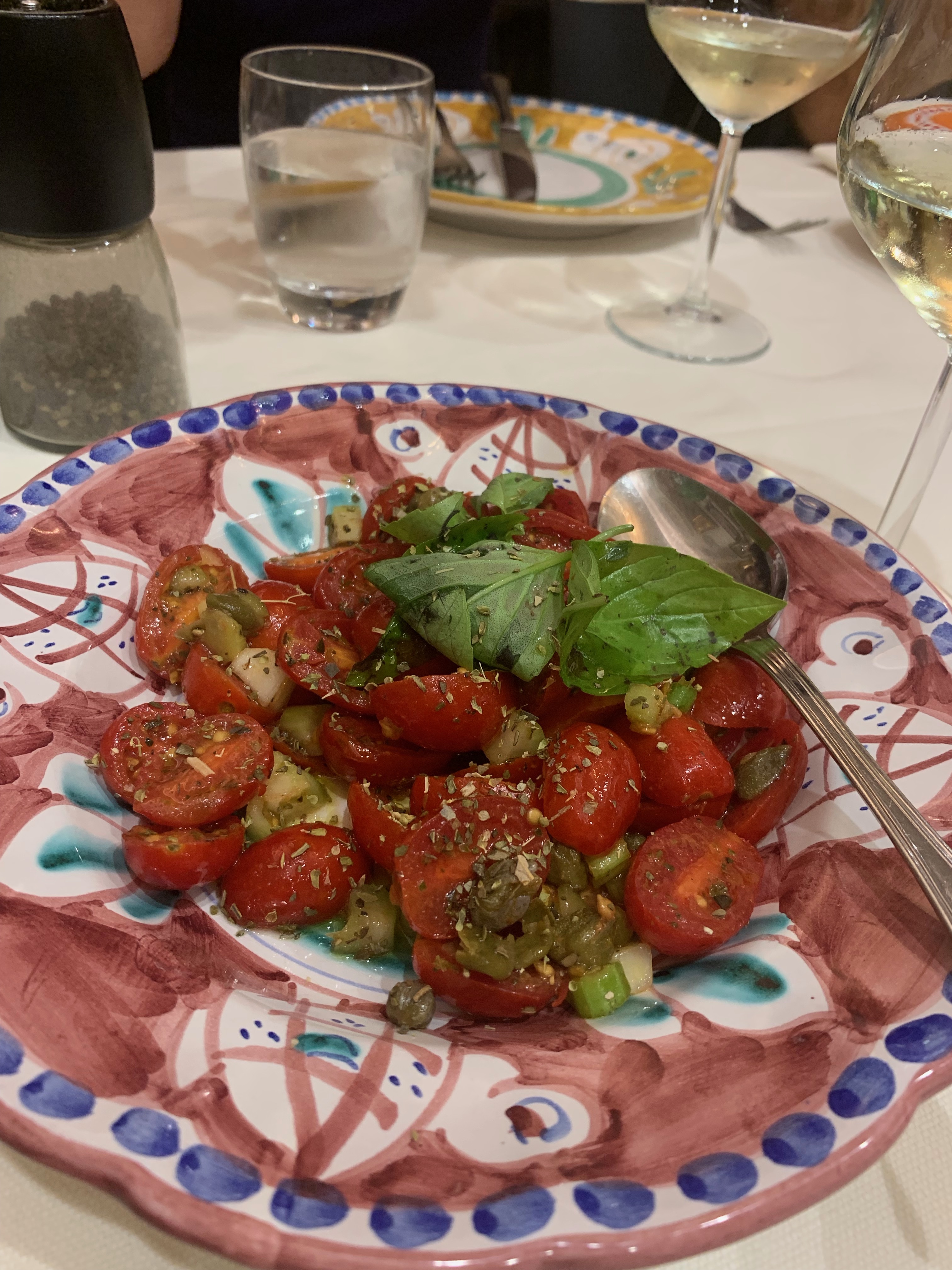
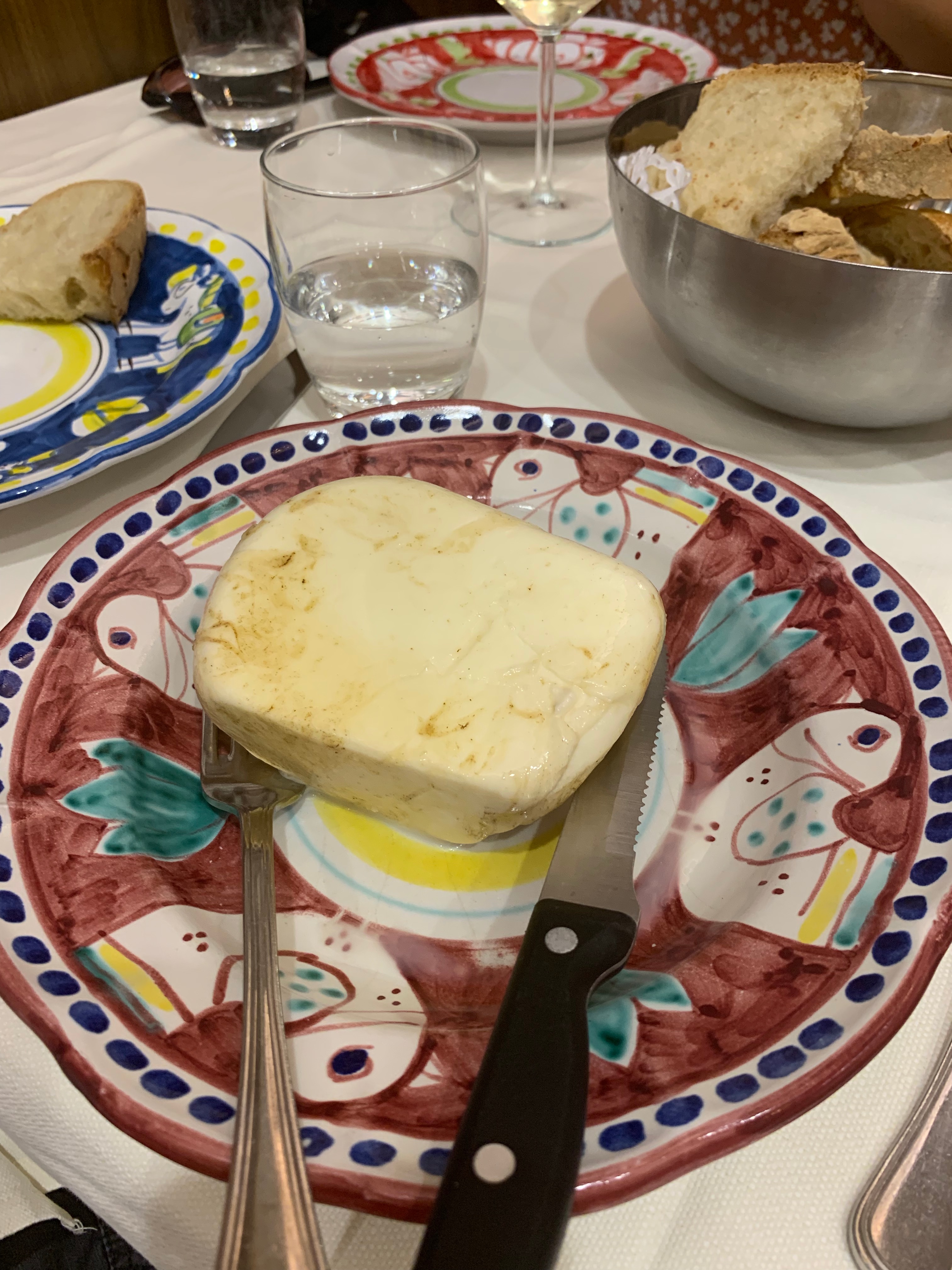
Abundance: lots of color, lots of flavors, lots of people, lots of fun – these are the precepts of life in Campania Felix.
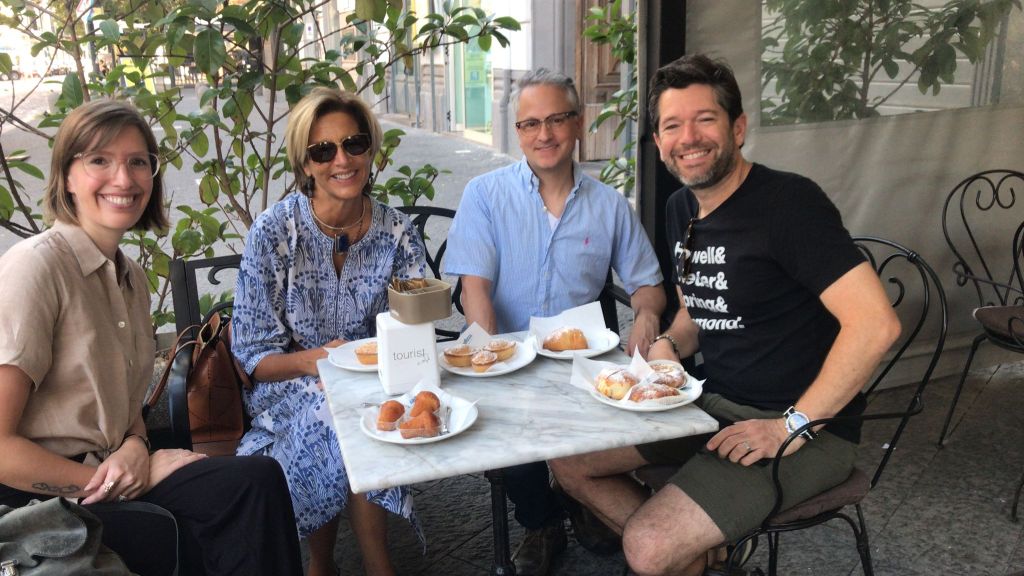
Despite our orgiastic dinner the night before, we felt a need to fortify ourselves with pastry on our first morning, before heading out of Naples into the hilly region of the Sannio, continuing the quest: the search for the perfect sfogliatella!
Our trip was a well-planned crescendo, courtesy of the Consorzio del Sannio DOP, starting out at a small, family-owned winery, moving on to a mid-size family-owned winery, and ending at La Guardiense, a large cooperative, one of the biggest in southern Italy. And we sampled wines of the Consorzio members all along the journey!
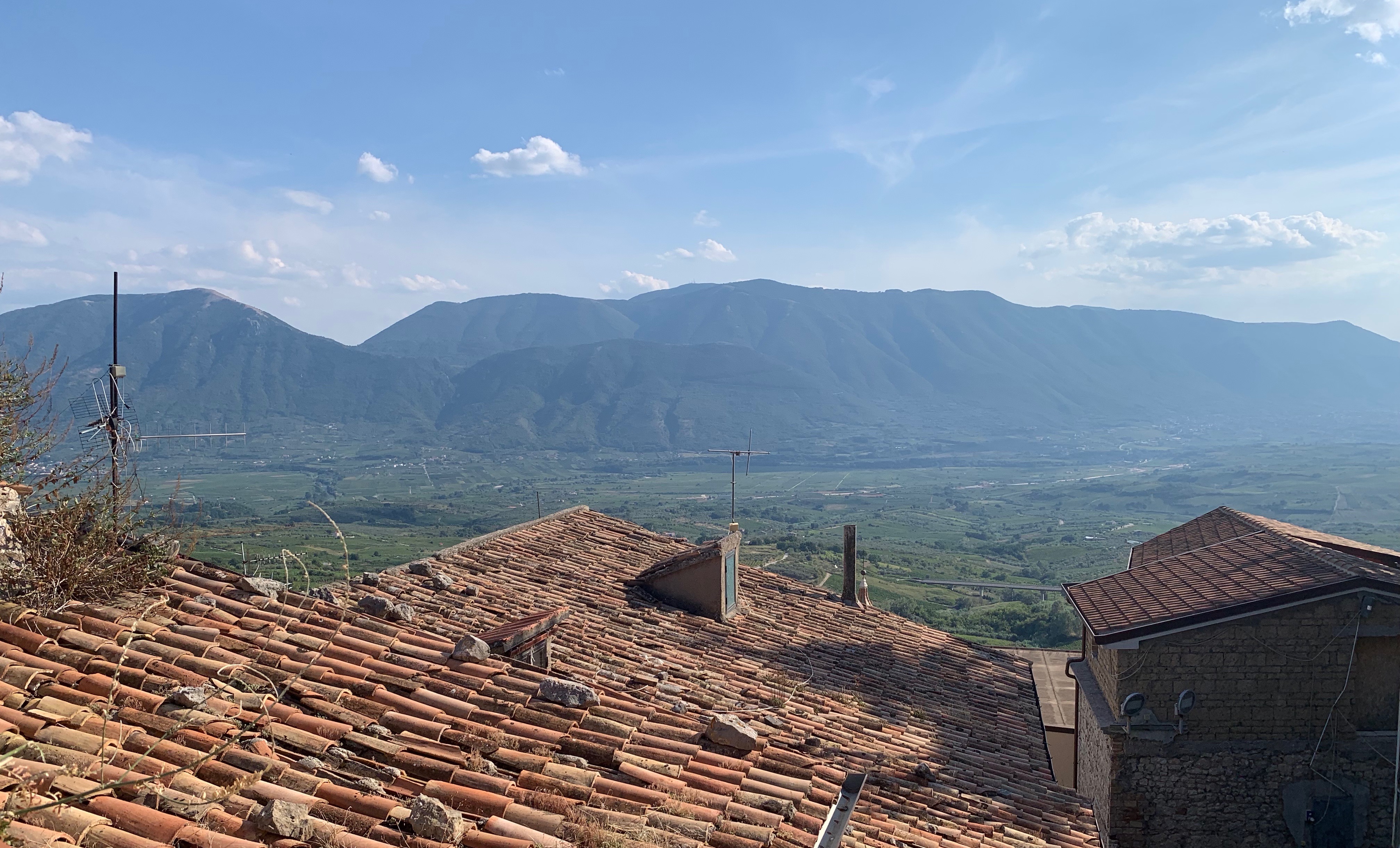
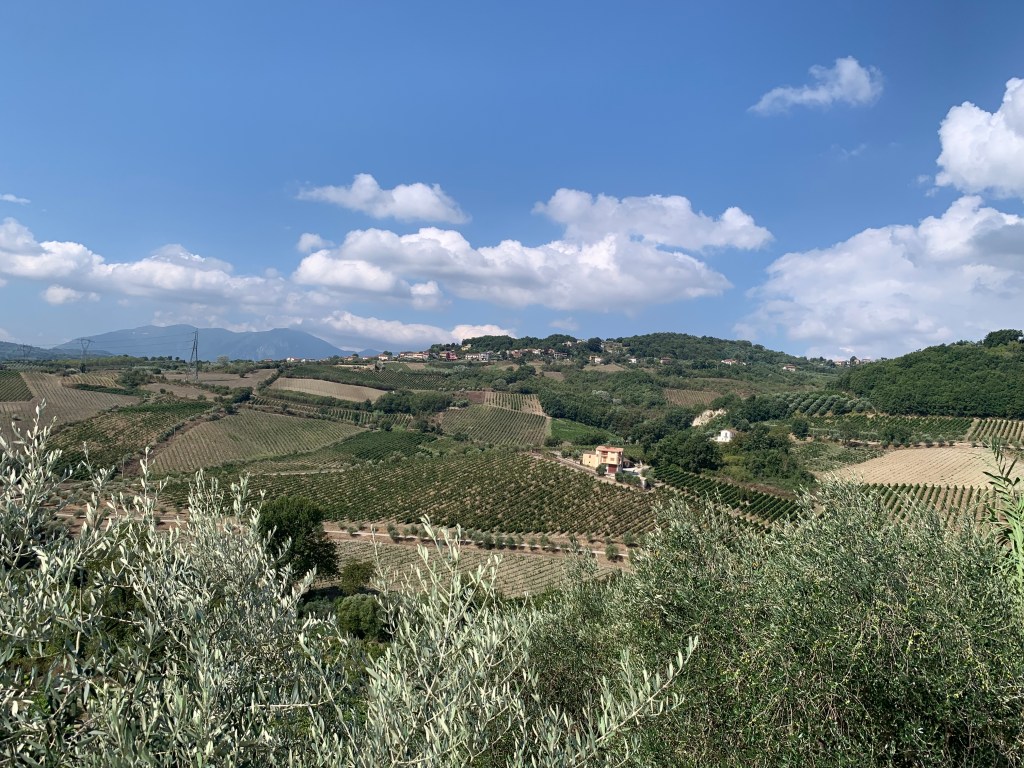
In this regione, there are two stars of the show: Aglianico del Taburno DOCG and Falanghina del Sannio DOC. What we discovered, though, was a broader cast of characters, some of whom might even steal the show! Oh, and then there’s the backdrop, the scenery, a protagonist in its own right: the Taburno mountain!
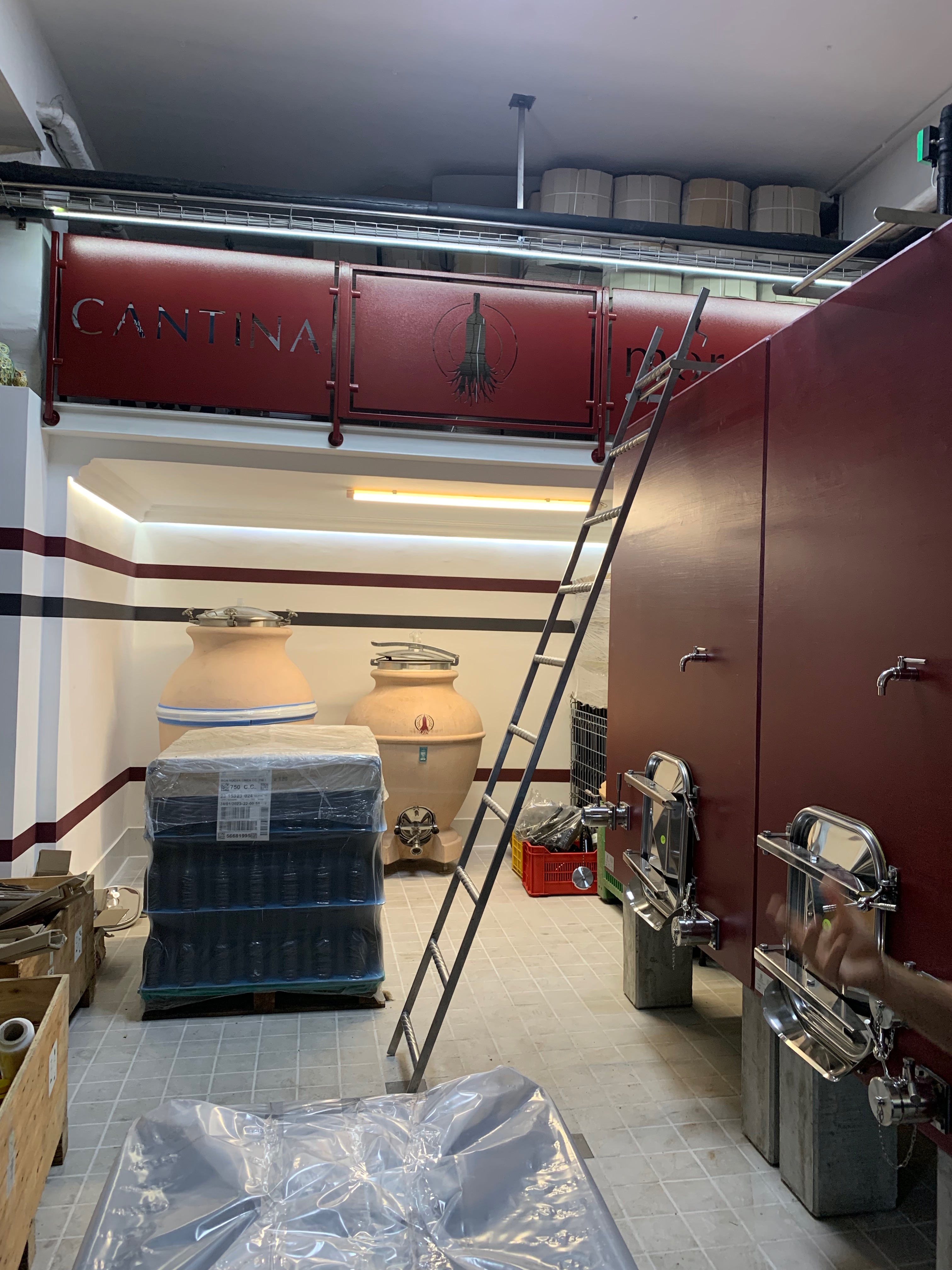
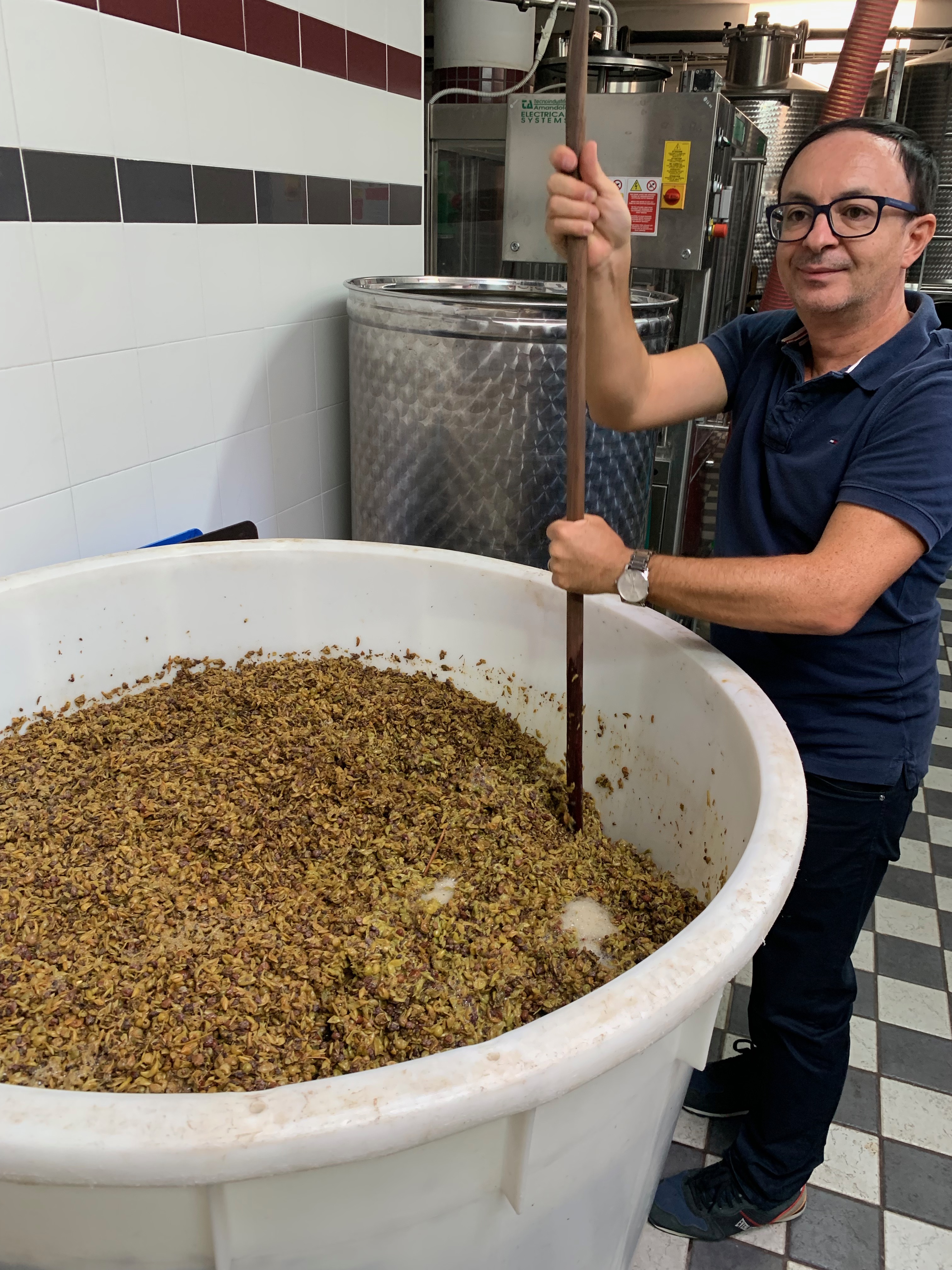
First stop: the Cantina Morone winery in the town of Guardia. Housed in, well, a house, I was struck by the spanking new machinery alongside traditional methods of punching down. This made for quite the contrast and drove home the point of how the transition is made from ‘this is what our grandparents did in the basement’ (the original wine cellar) to modern winery.


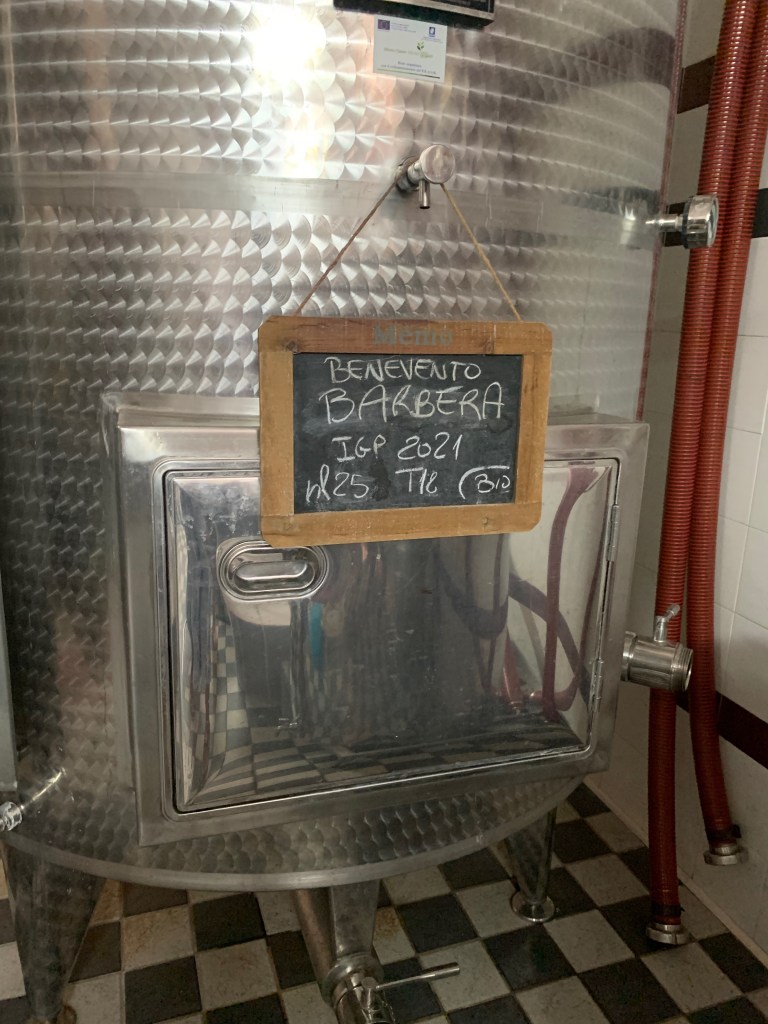
We were all pretty surprised to see the ‘Benevento Barbera’ label on this tank! More on that to follow…
Our first tasting let us explore the myriad manifestations of Falanghina, which can be made as a still wine, bubbly (Charmat method or Metodo Classico), late harvest or even Passito – and we tried them all!
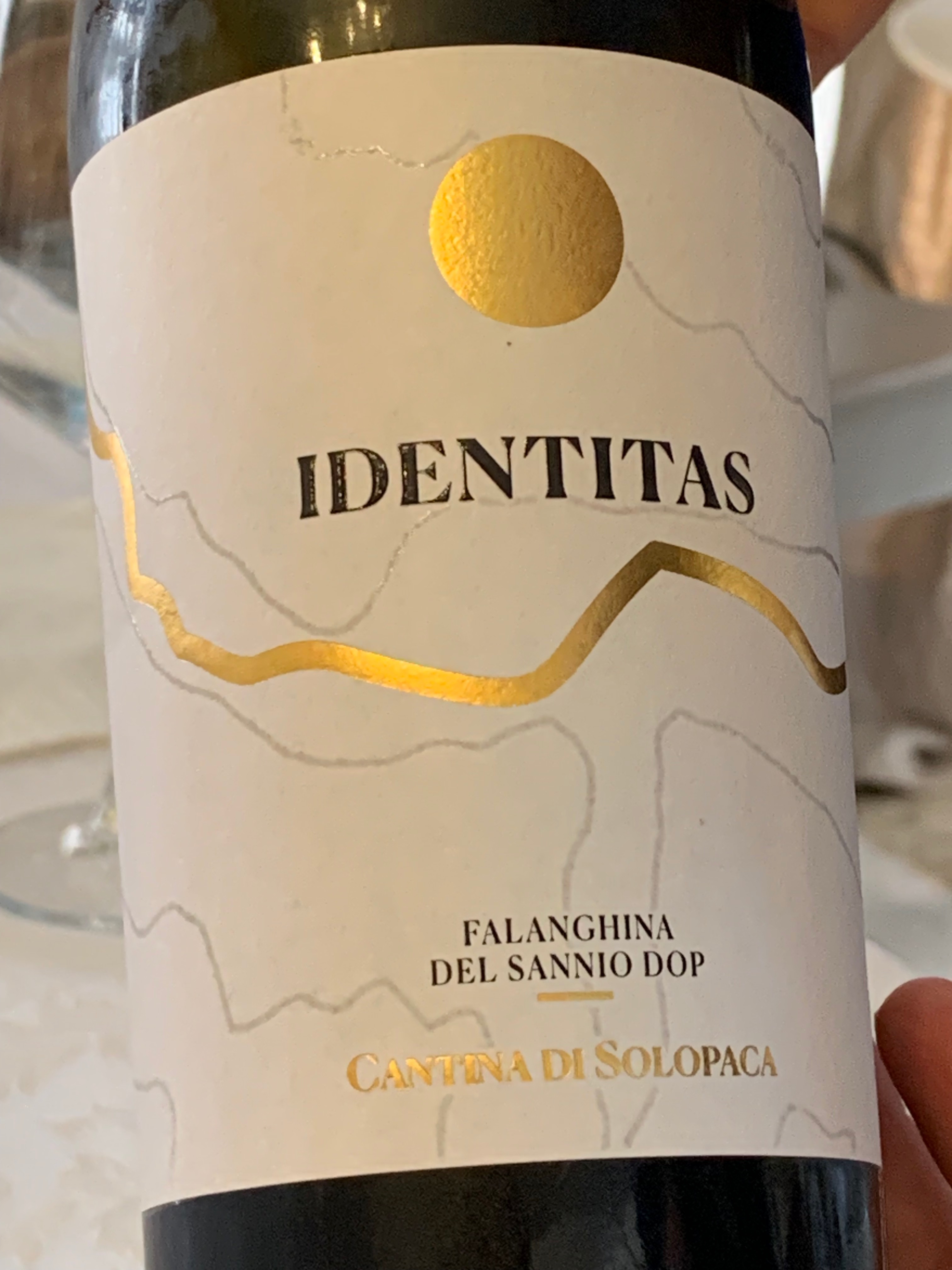
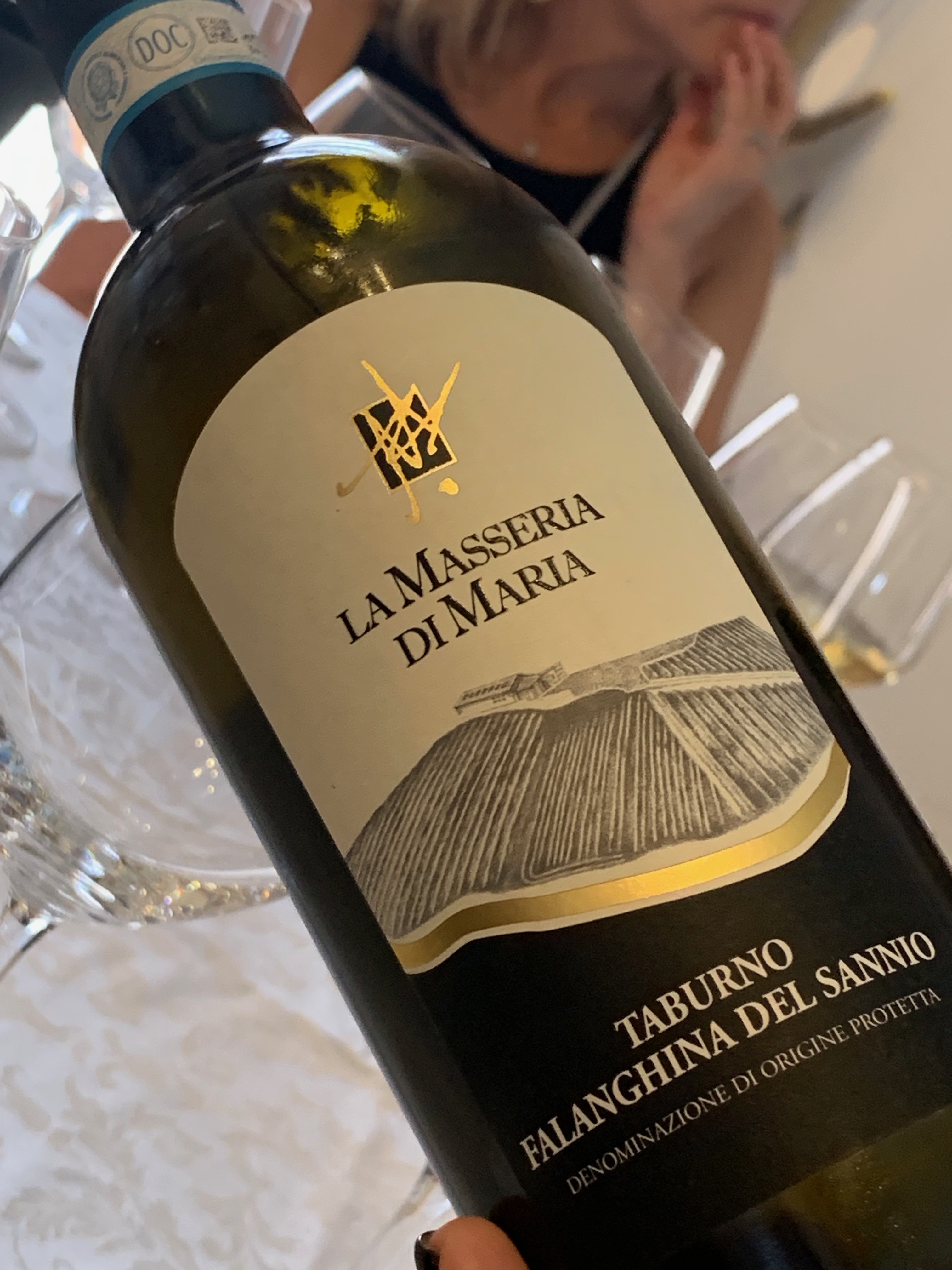
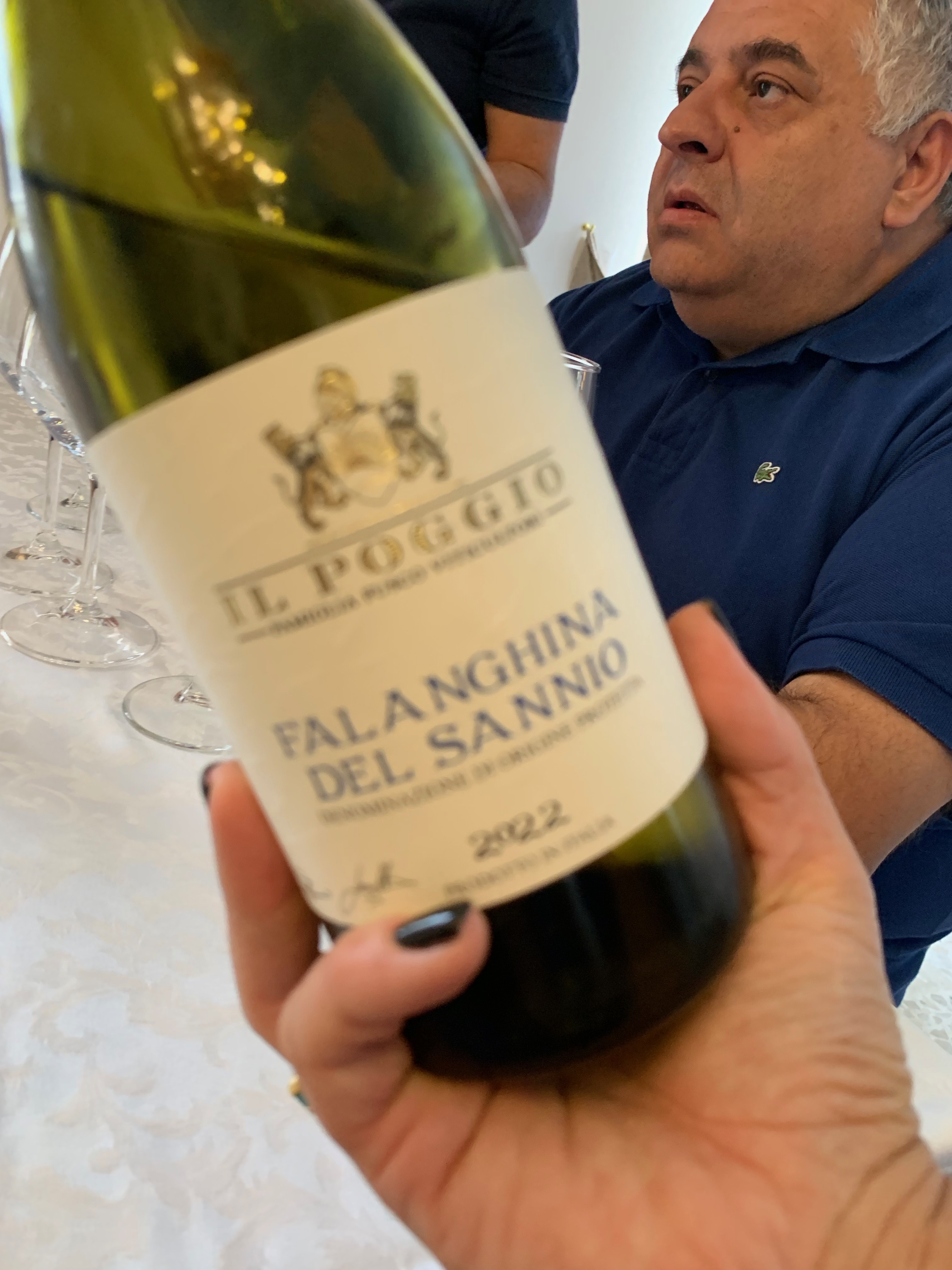
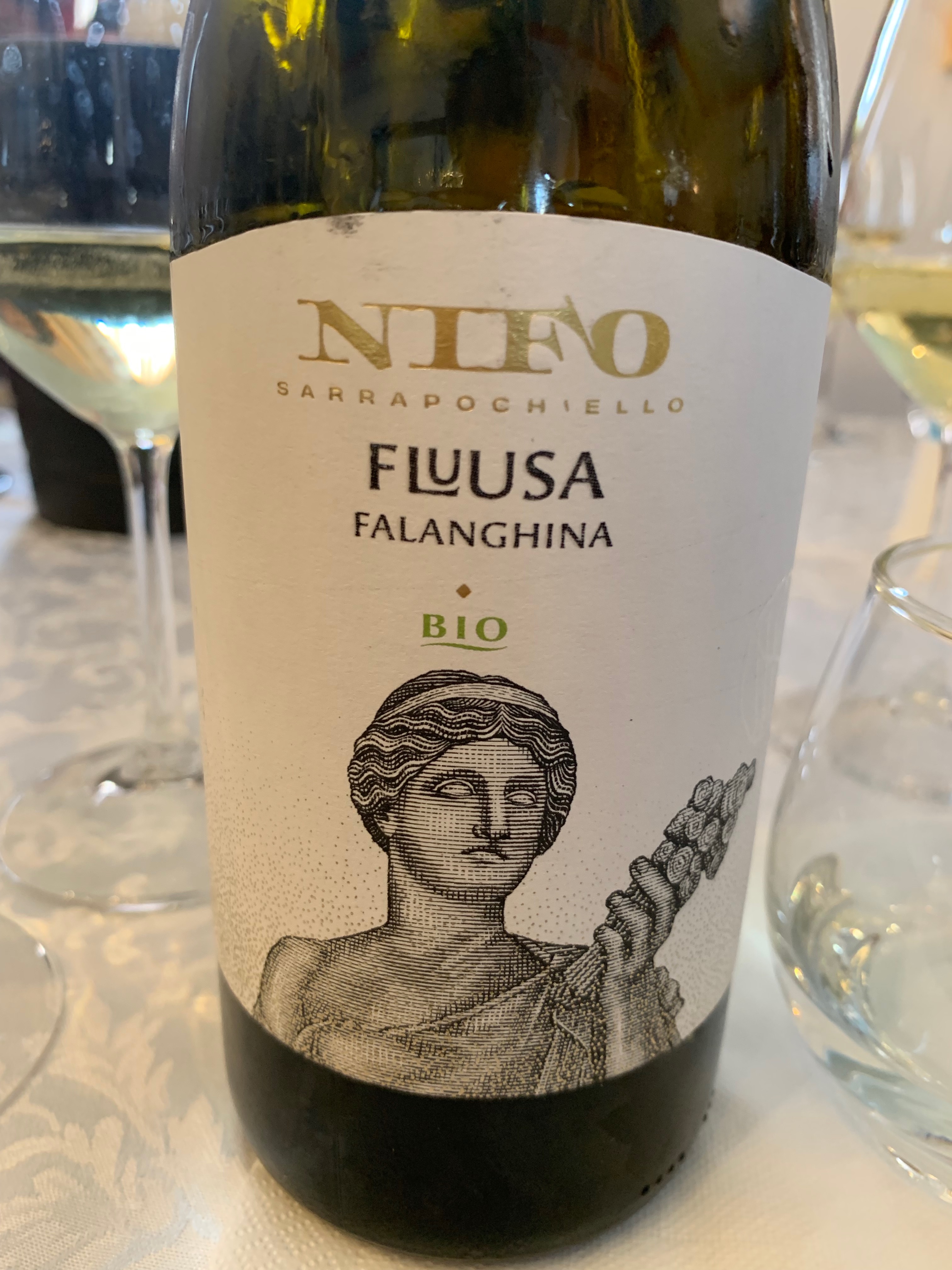
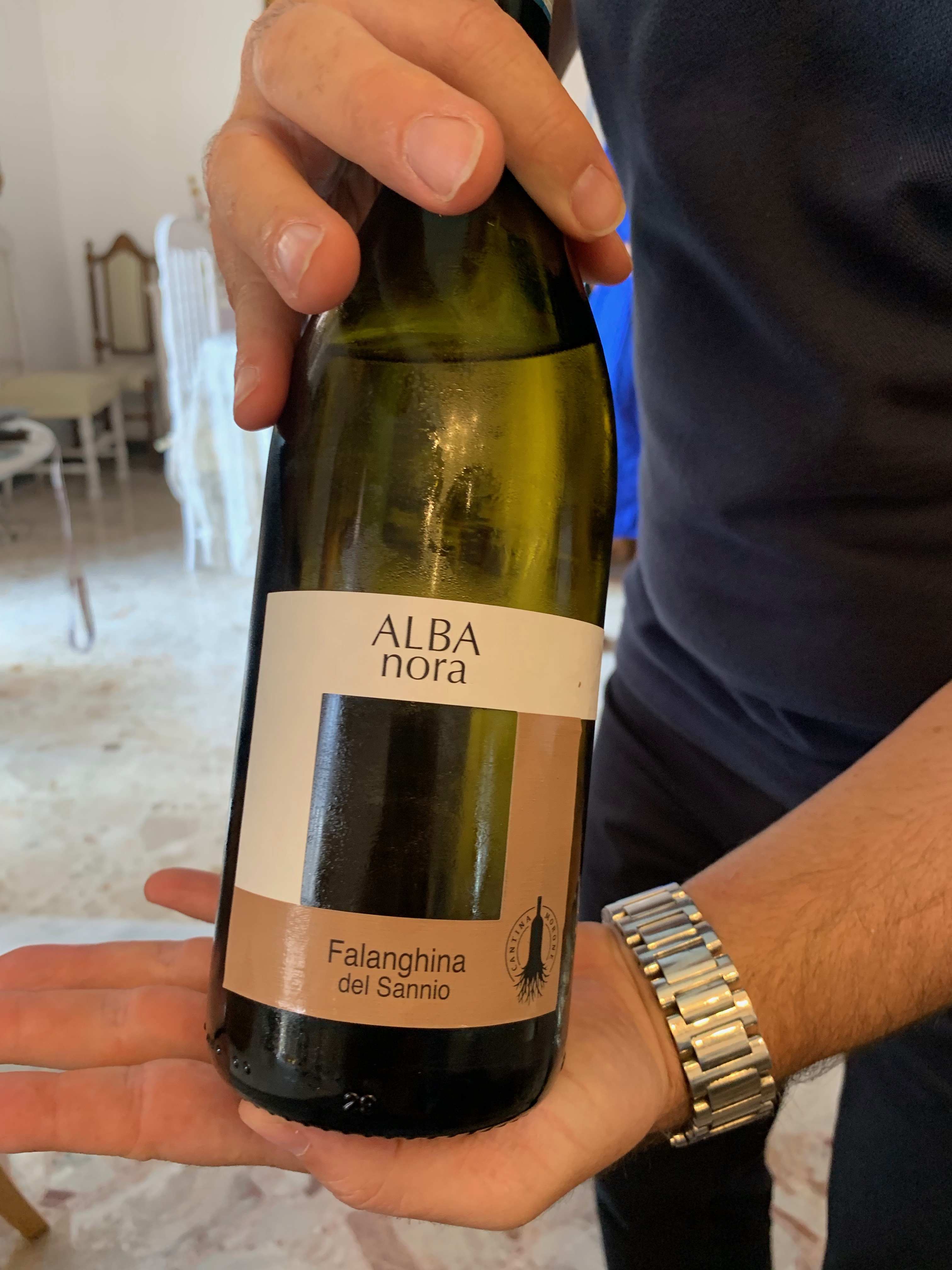
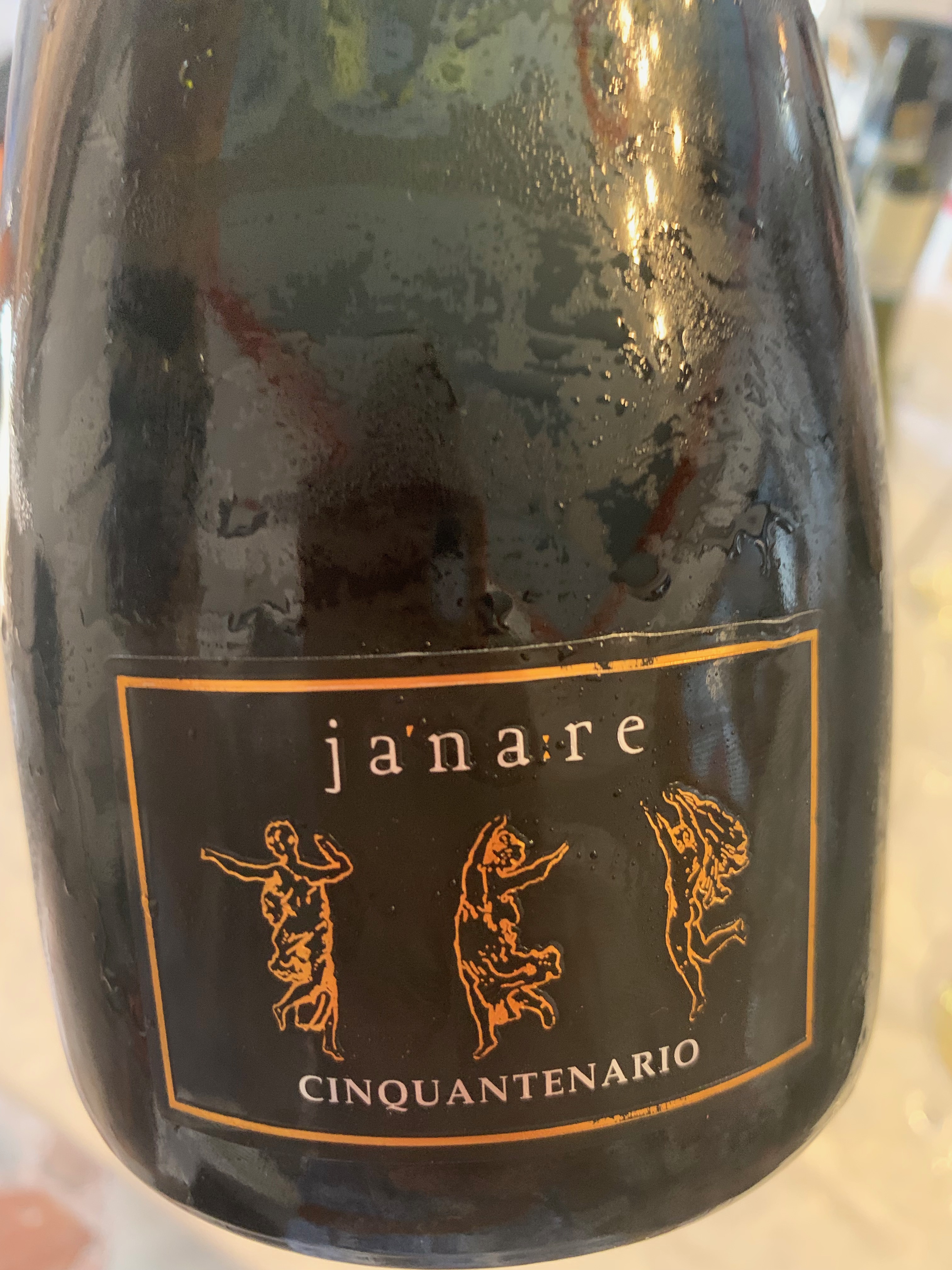
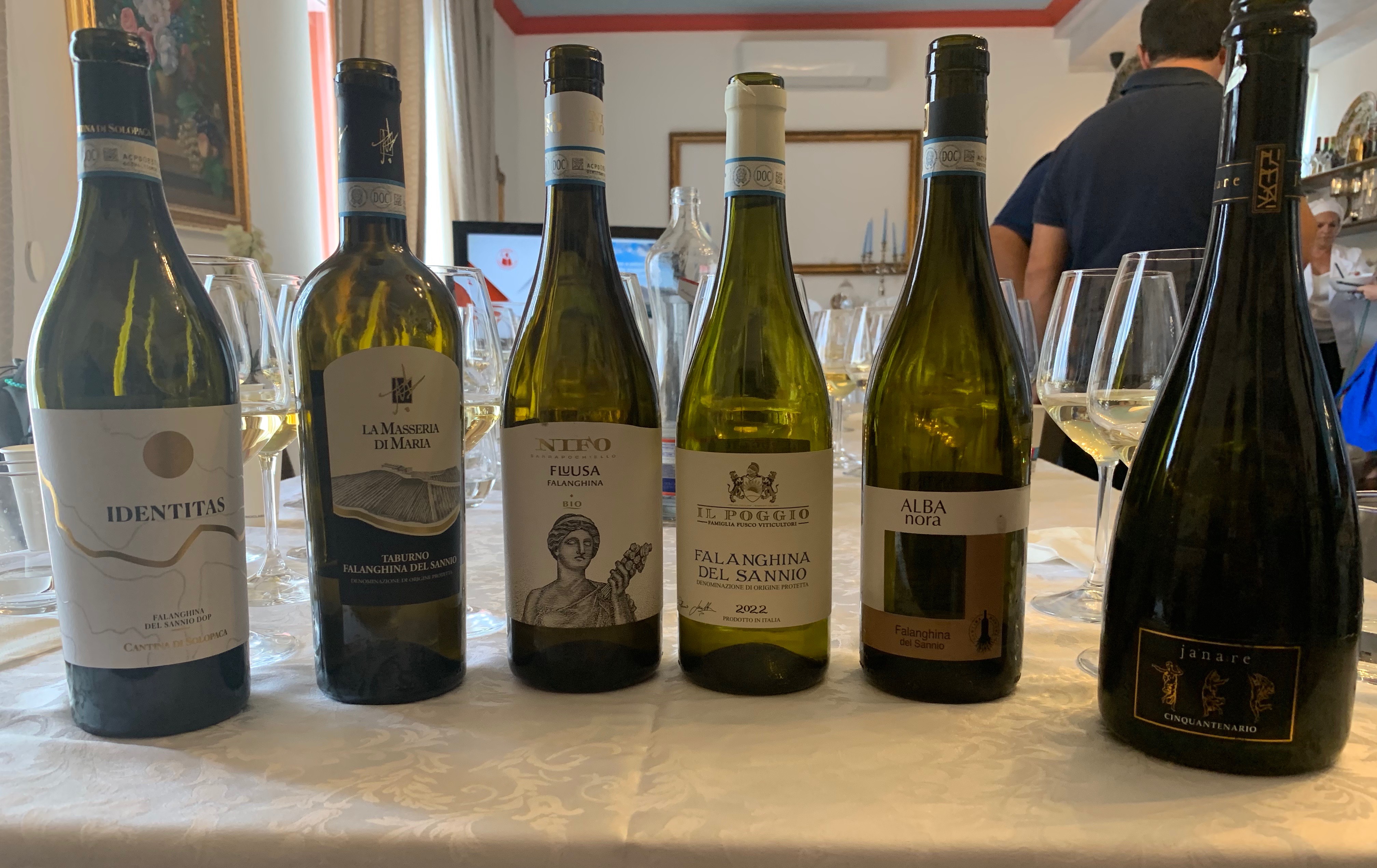
You can see the bottles were sweating, and so were we! With the fall chill in the air, it’s nice to remember sunny Sannio and the last days of summer…
The tasting: our first wine was made by the Cantina di Solopaca, a large cooperative from the town of Solopaca, located in this Land of the Samnites (an ancient tough and war-mongering Italic tribe dating to 1000 BC!) Identitas Falanghina del Sannio DOP, like its name states, represents the territory with a pineapple nose and fresh appeal. The next three wines were from the Taburno area: the first, La Masseria di Maria Taburno Falanghina del Sannio DOP showed great complexity on the nose, with pine forest, pineapple, vanilla, chamomile, saffron, green pear, stone fruit and a balsamic note. The third wine, Il Poggio Falanghina del Sannio 2022, was an intense gold yellow color and on the nose showed eucalyptus, pineapple and pear drop; on the palate a hint of flint and minerals. By the time we got to Nifo Sarrapocchiello Fluusa Falanghina Bio, an organic wine with a beautiful label, something had me thinking Asian cuisine. Nice mouthfeel and a lovely aftertaste of exotic fruit, some of the warmth here can be attributed to the 14% abv. Our host’s Alba Nora Falanghina del Sannio with a deep yellow color had a distinctively sweet nose with vanilla, some stone fruit or even stewed apricot nice acidity and salinity. But the real surprise was the Janare Cinquantenario Metodo Classico Millesimato 2018 (the year was not that evident on the label). Fifty 5 – 0 months on the lees, with the dancing witches of Benevento on the label, this wine may be described in a word: WOW!
Many thanks go to our cultural and enological guide to the tastings, Pasquale Carlo, who recounted with great enthusiasm the history of the place along with the wine-making history.
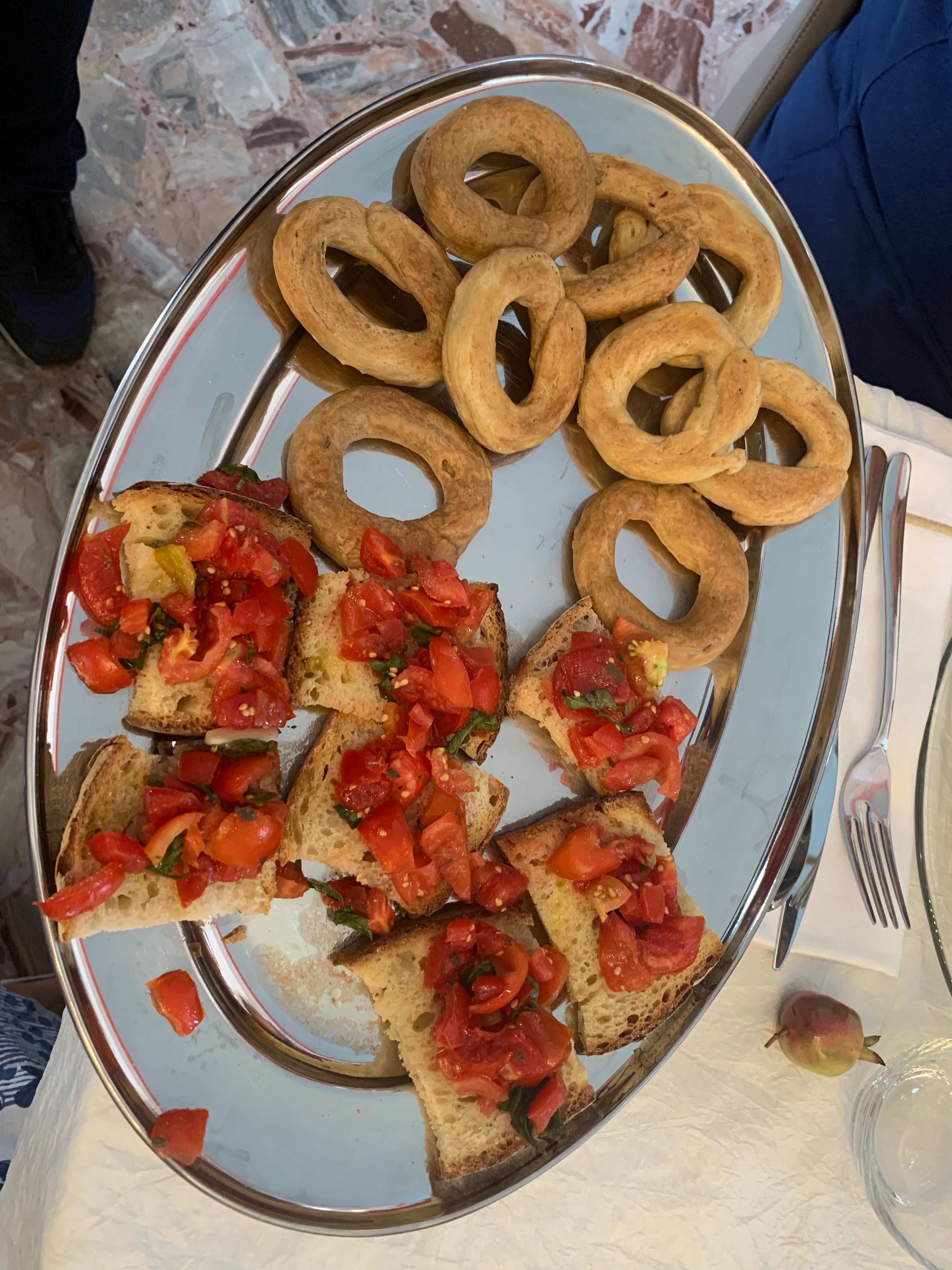
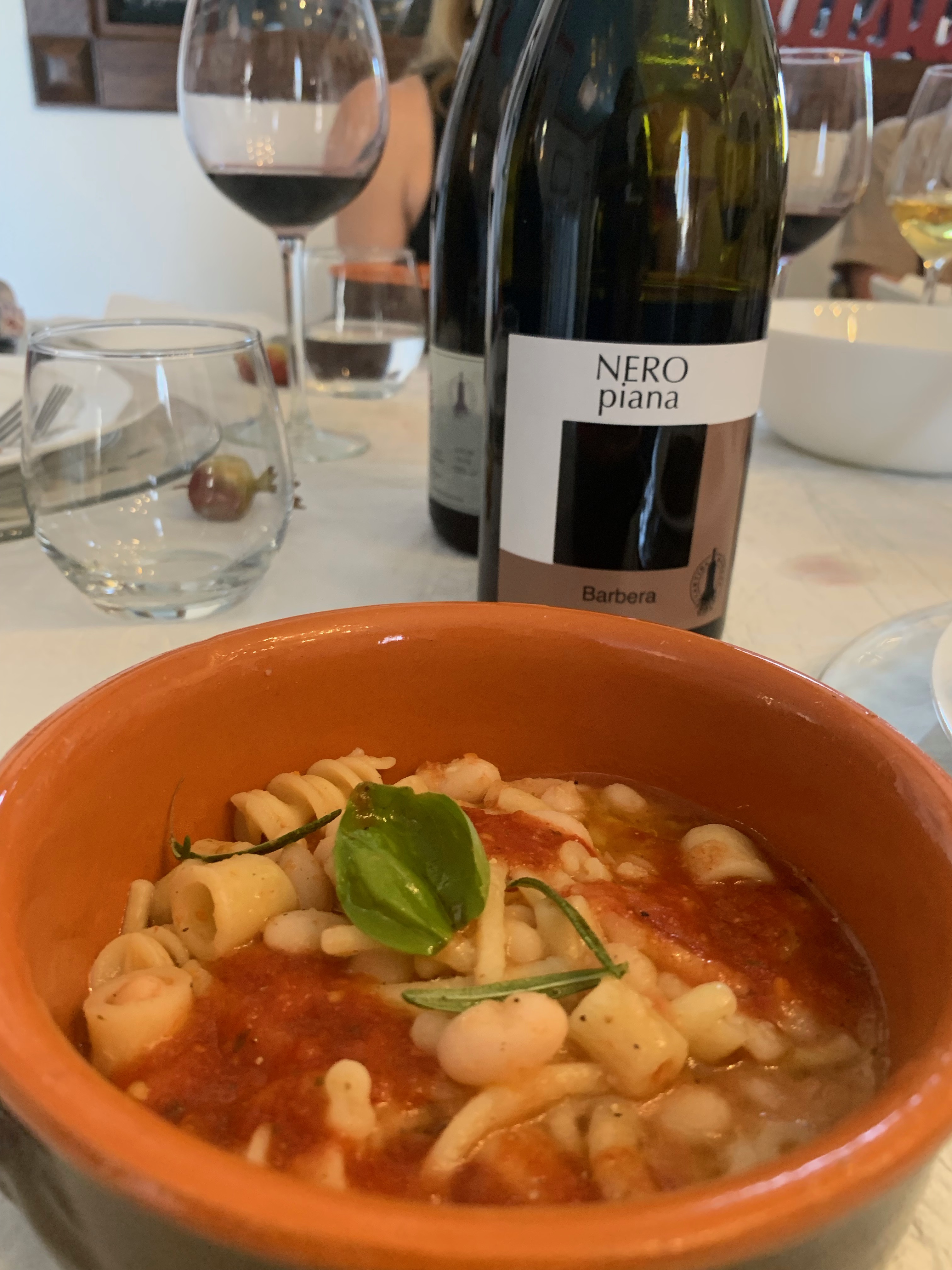
Luckily they billed this as a ‘light lunch’ – imagine what it would have been if it weren’t light!
Have to say, this took me back a long way to when my great-grandmother was making pastafazool, the famous pasta e fagioli. Scrumptious. And of course, Mamma made it!
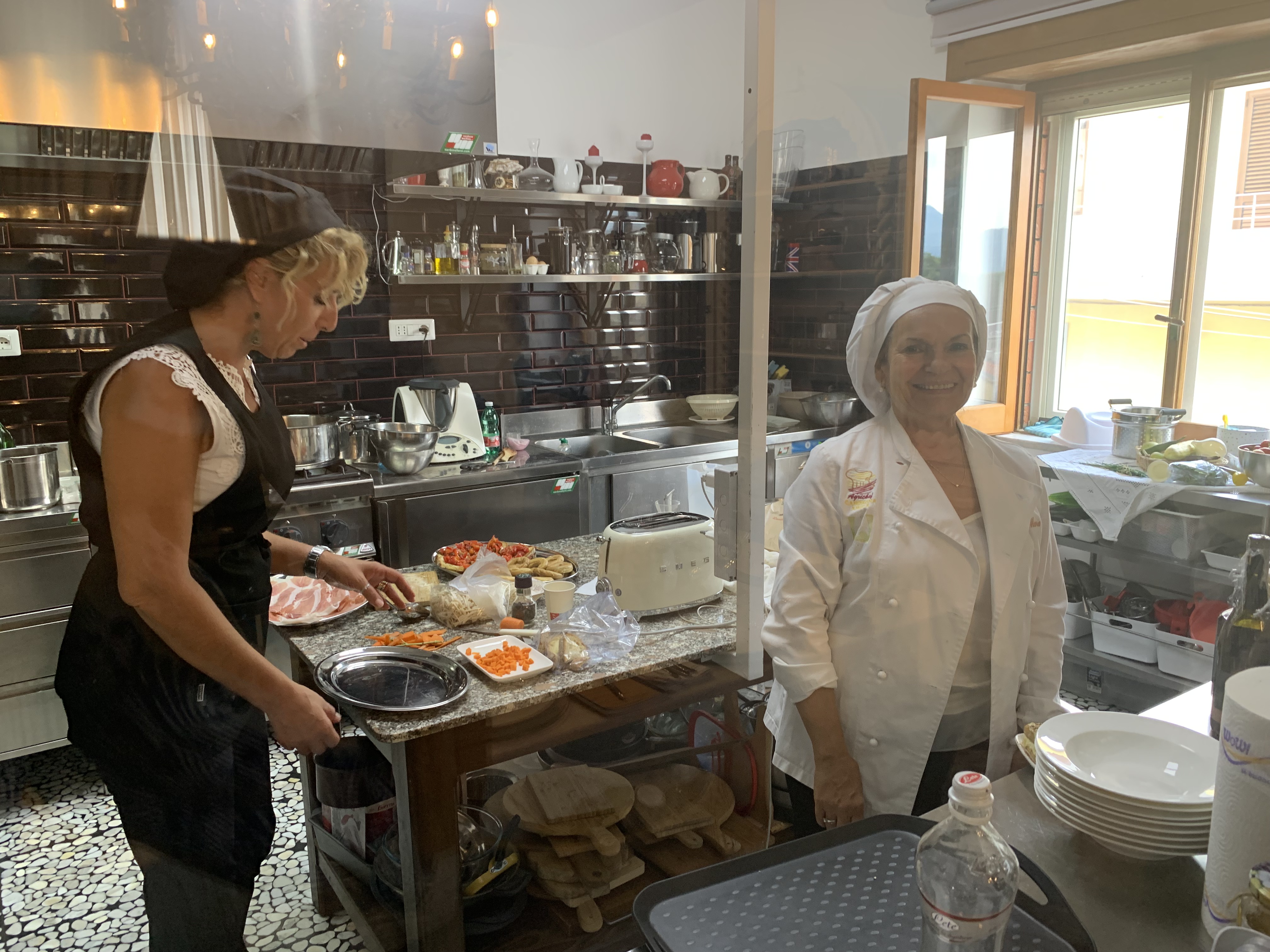
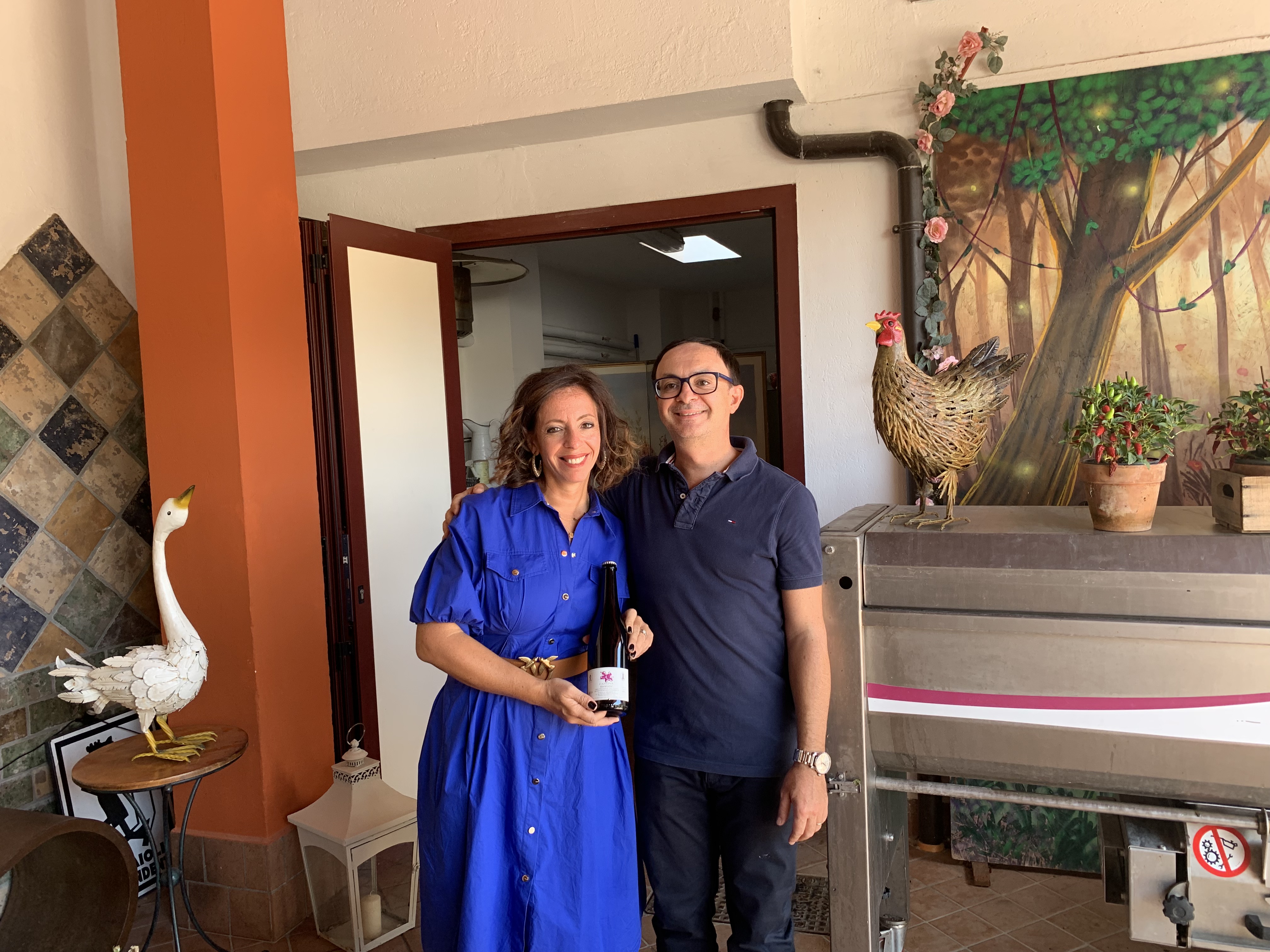
It’s all in the family: Mamma Morone (left) in the kitchen, and Eleonora and her brother (right) in the winery
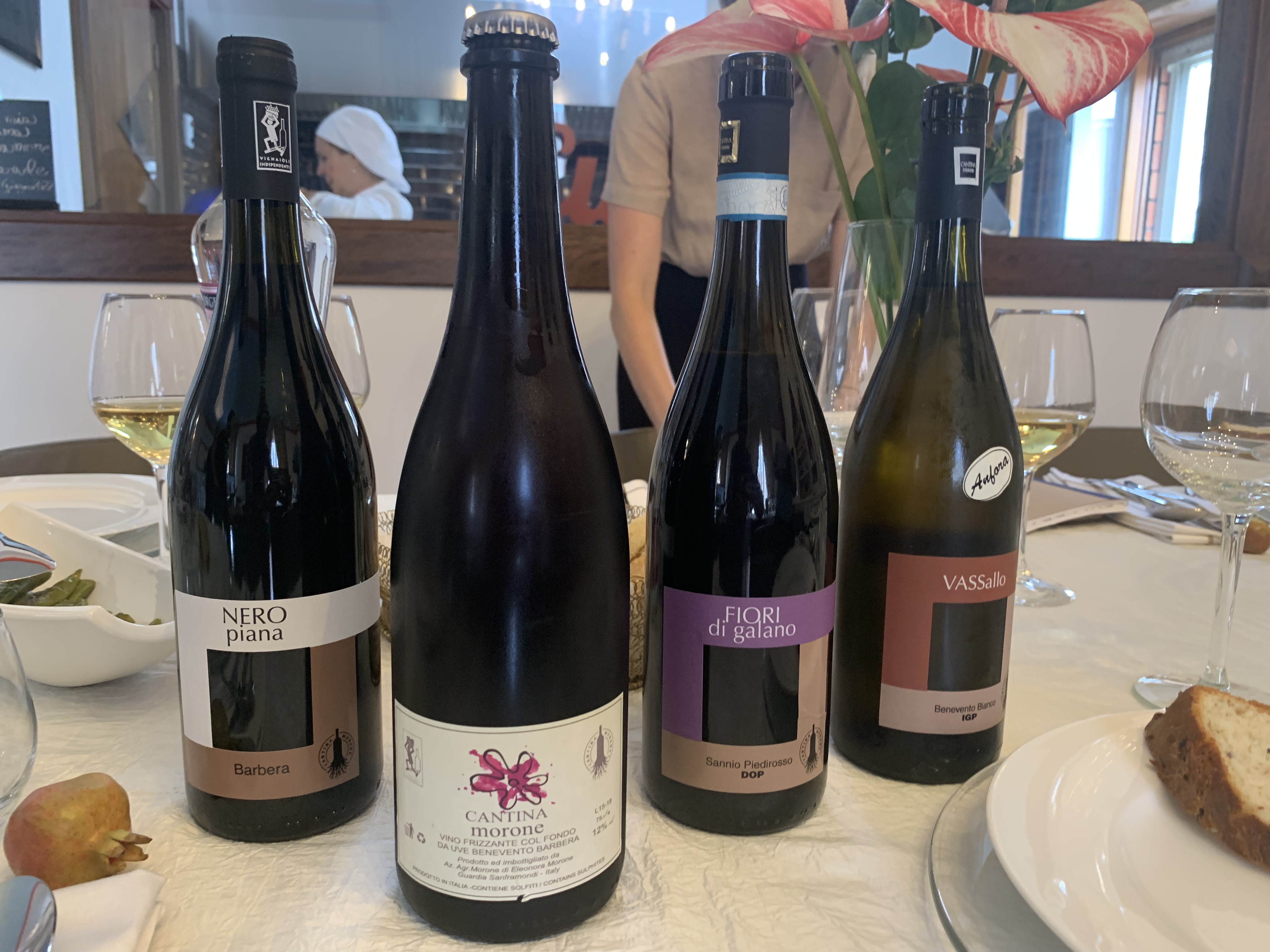
Lunch was accompanied by the red wines of our hosts.
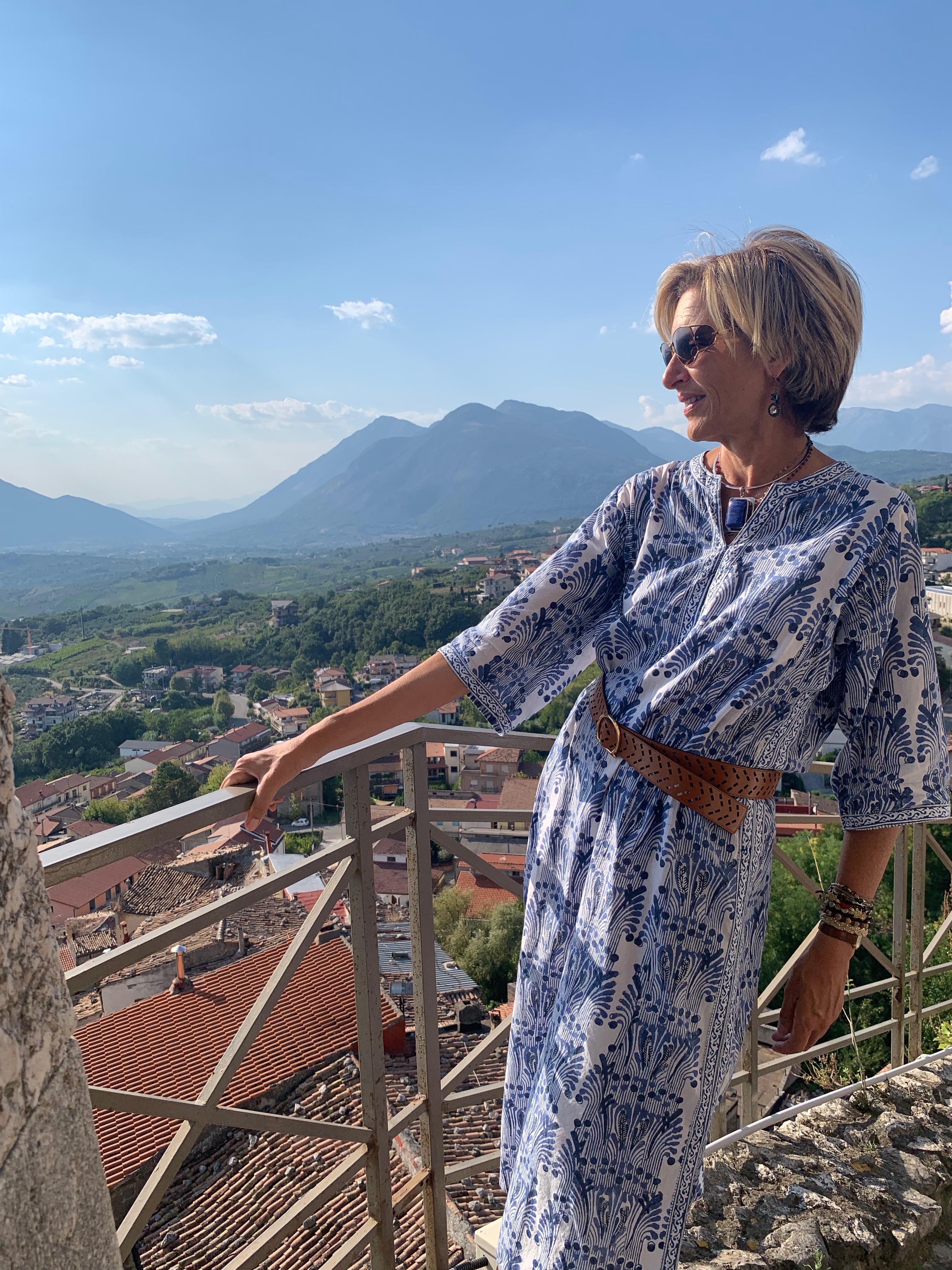
We couldn’t leave Guardia Sanframondi without a proper visit. A church, a castle, nature… the beauty is overwhelming. Welcome to Italy! But in every little corner there is some treasure waiting to be discovered.
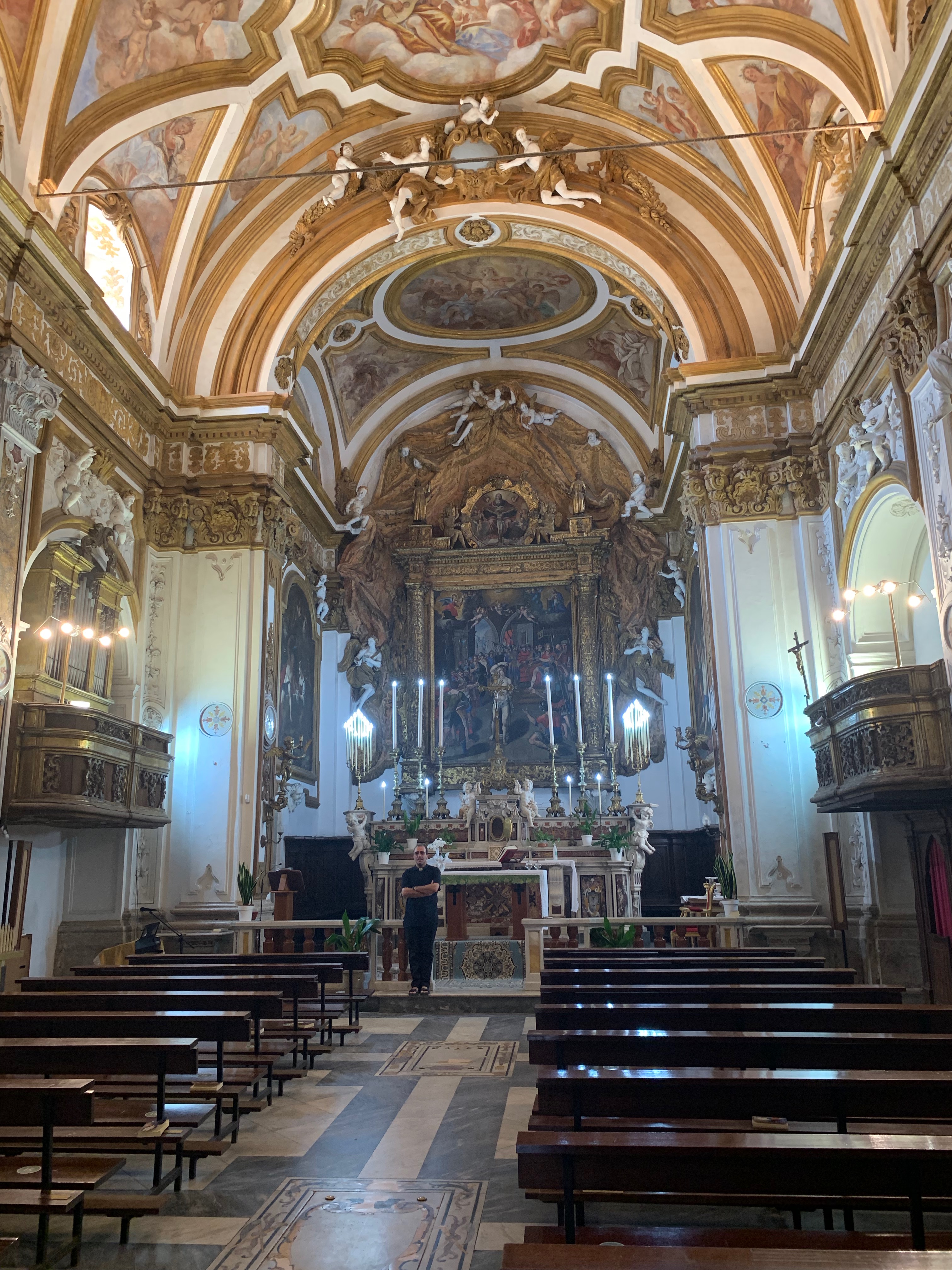
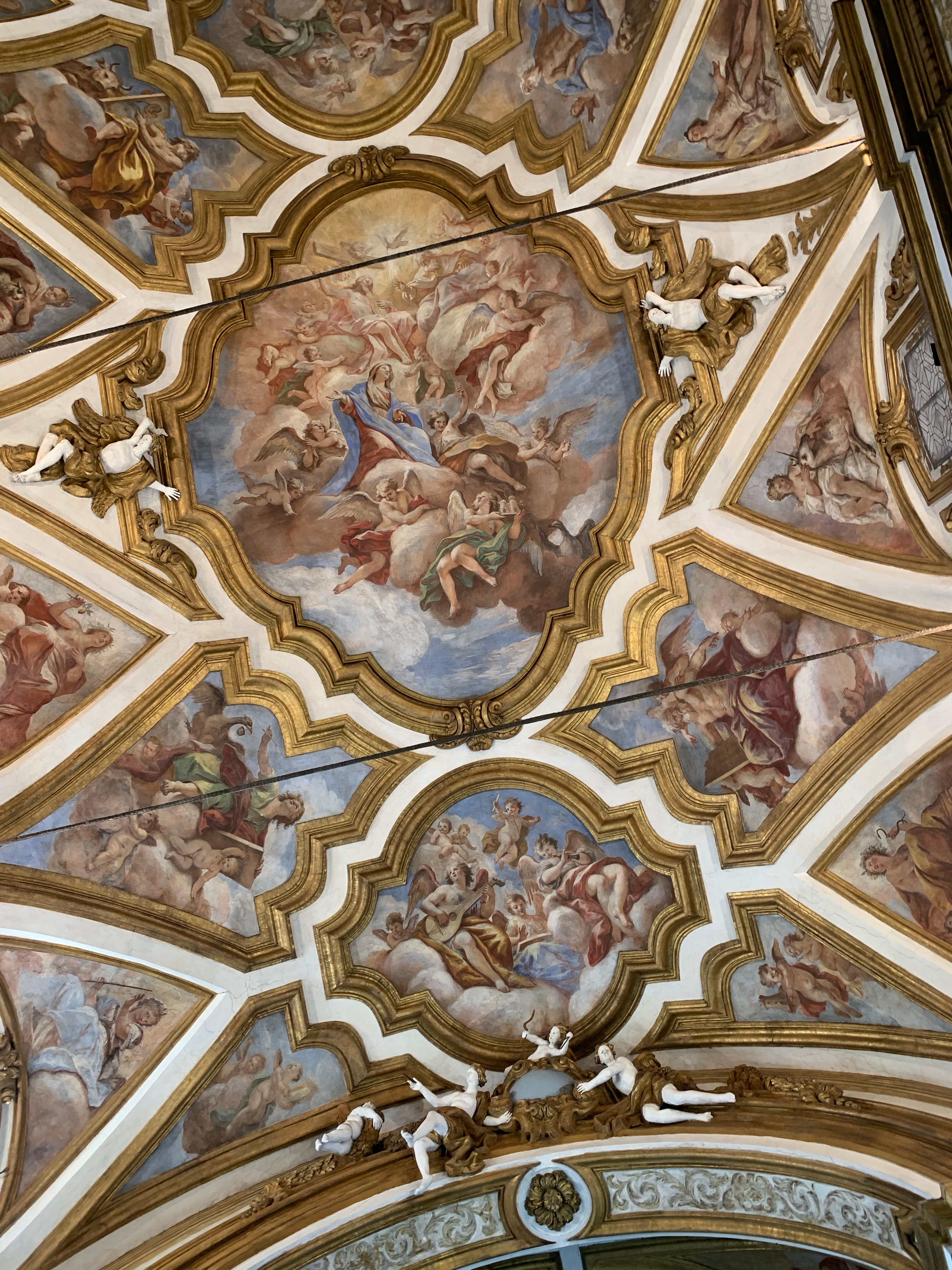
What awaited us here was a priest who could explain the great art of his San Sebastiano Church! And what a ceiling! Paolo De Matteis, one of the great artists of the Neapolitan Baroque, student of Luca Giordano, spent a lot of time here in Guardia frescoing this church, a clear sign of just how wealthy the town was some 300 years ago.
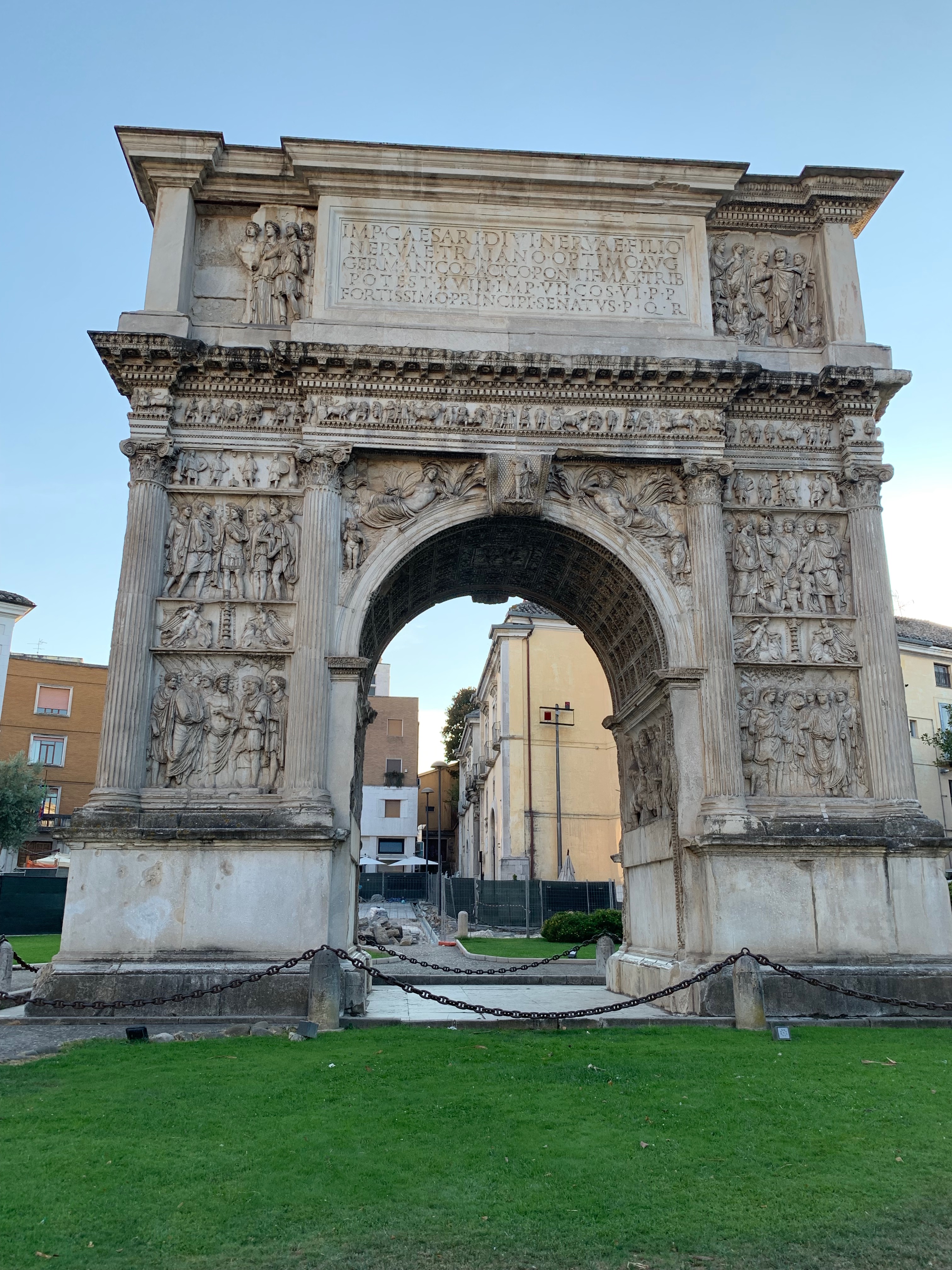
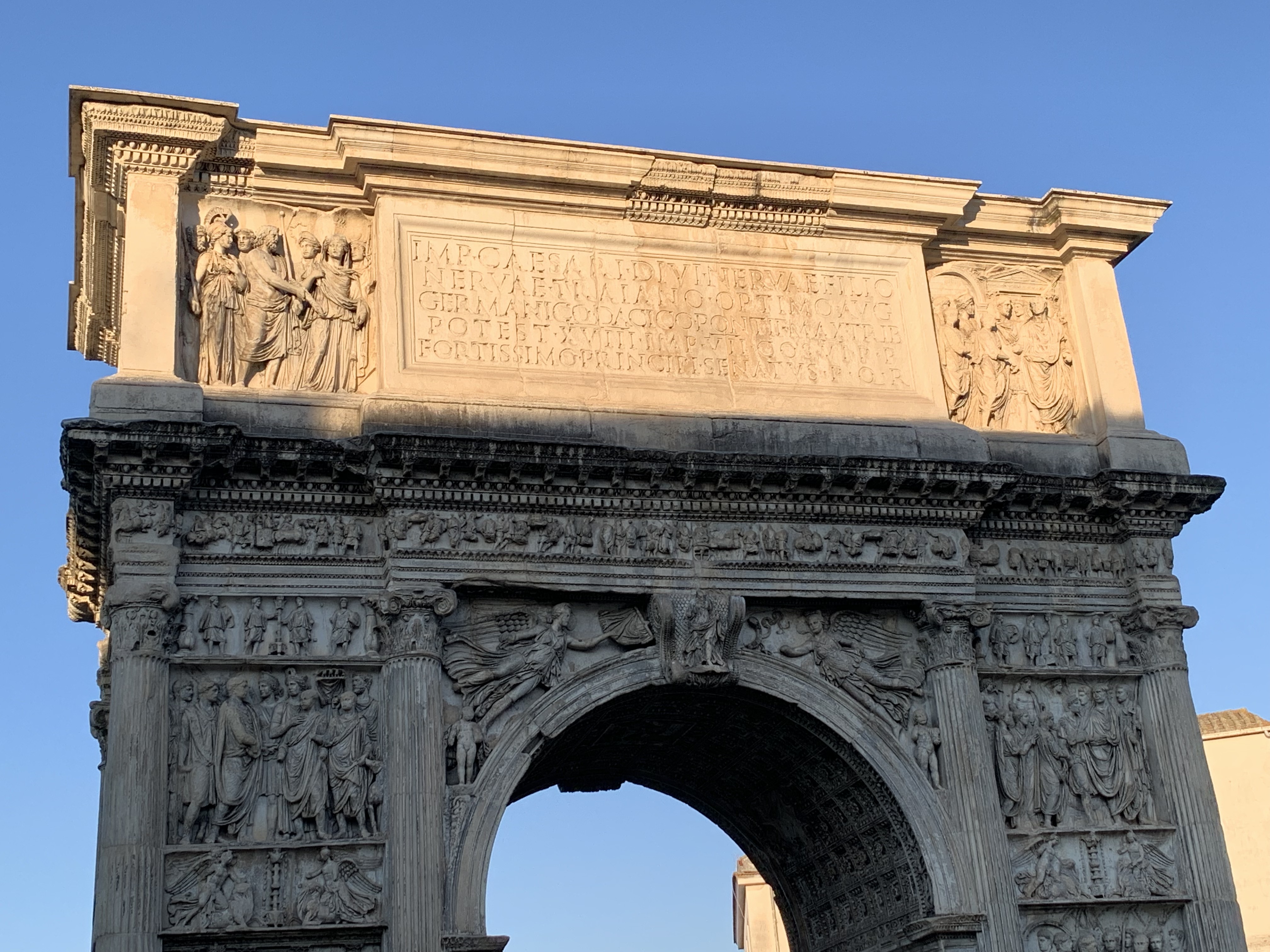
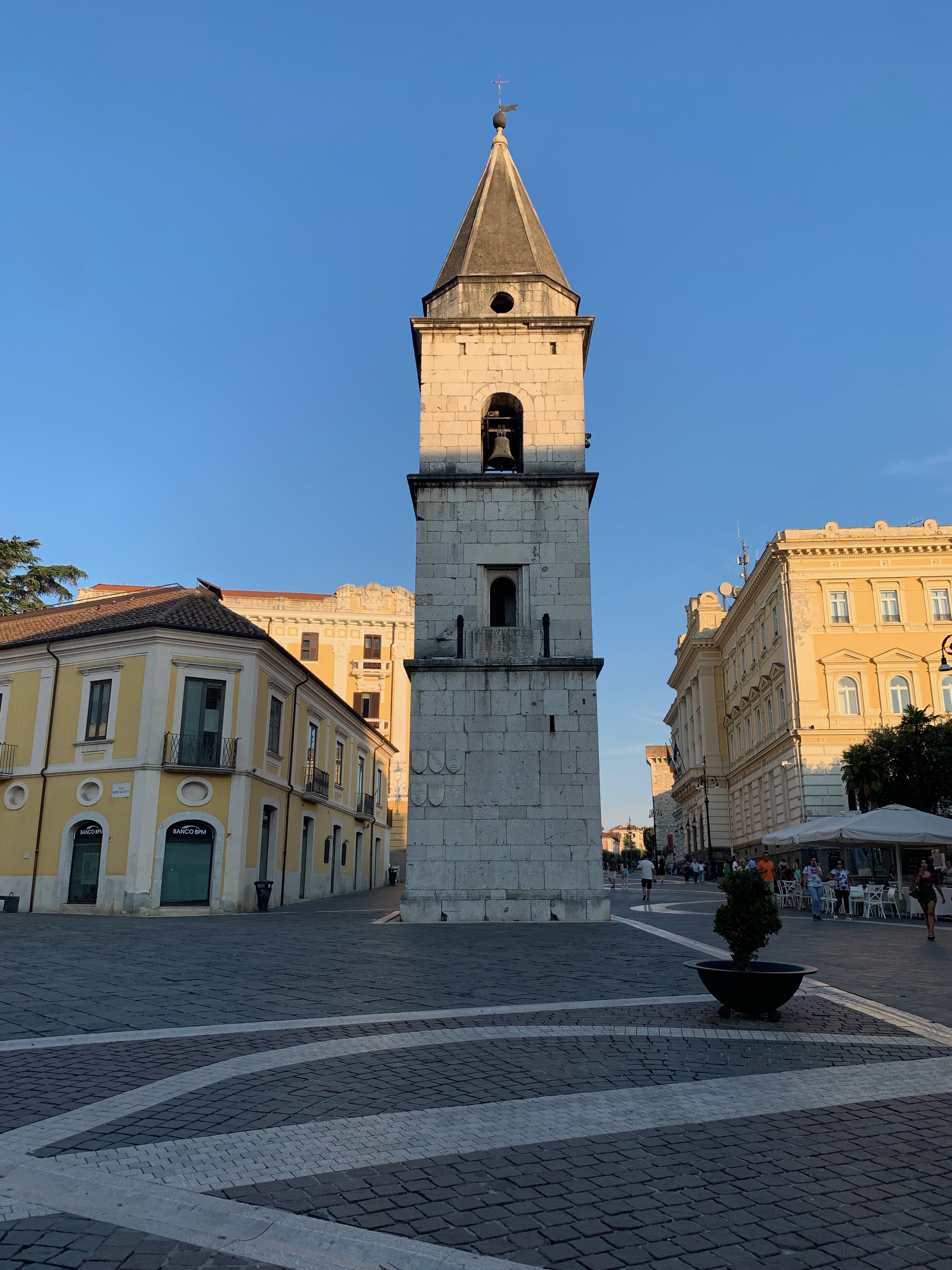
Finally, Benevento, the capital city of the Sannio area. More beauty, more wine, more food: our cups runneth over. The Arch of Trajan, built between 114 and 117, greets you as you arrive in Benevento, the view travelers have been getting these past 2000 years. Can I say just how incredible this triumphal arch is? Day, night, it is always gorgeously surprising for its detail and beauty.
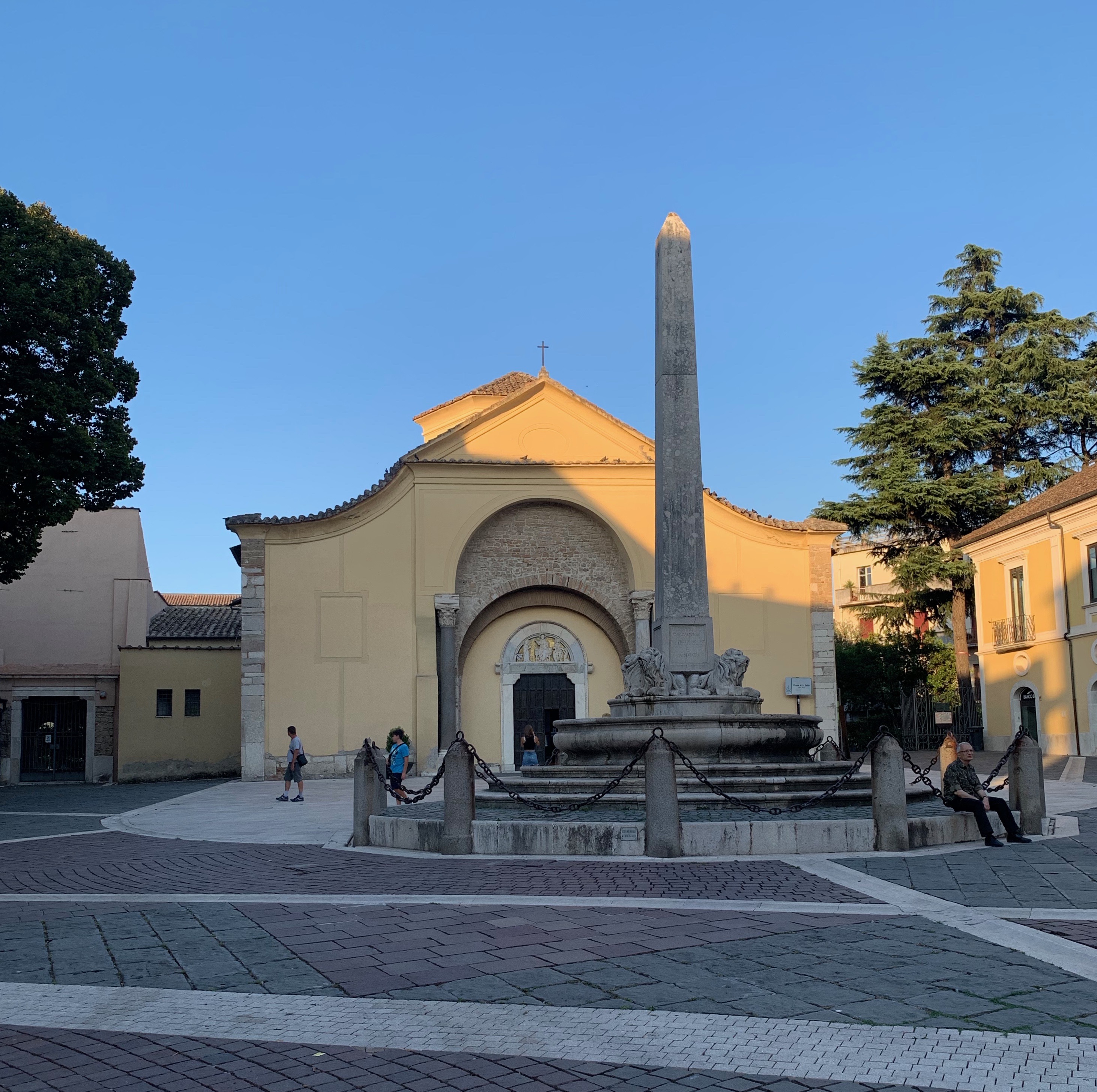
Even if the Church of Santa Sofia is actually the UNESCO World Heritage Site of Benevento.
And it wouldn’t be Italy if the day didn’t end with dinner. A sinfully spectacular burrata filled with gorgonzola cheese was our starter. How do you top that? Maybe with an equally sinful eggplant parmigiana? Or how about the simplest of simple pasta dishes: with tomatoes and basil, the true test of a great chef.
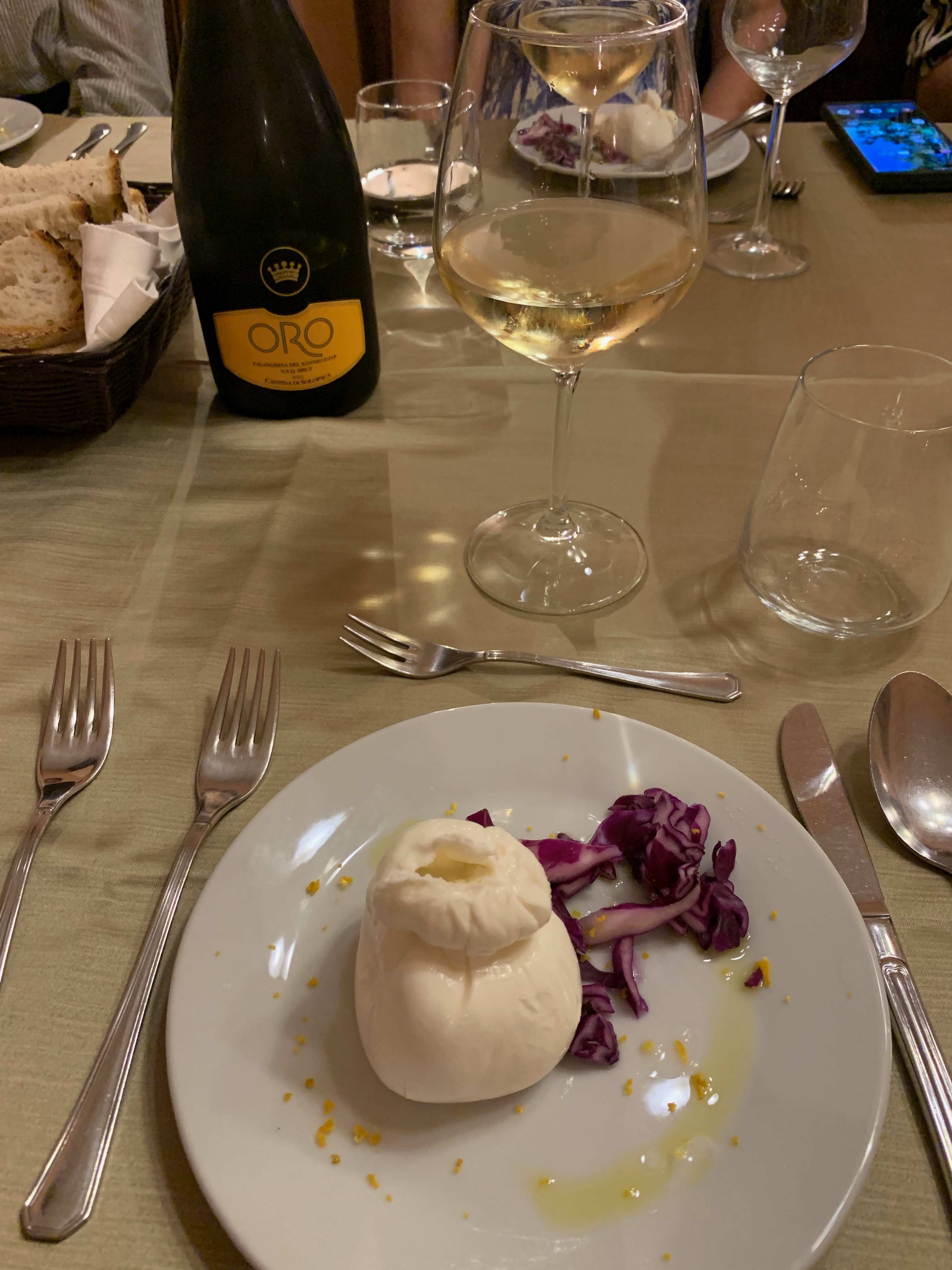
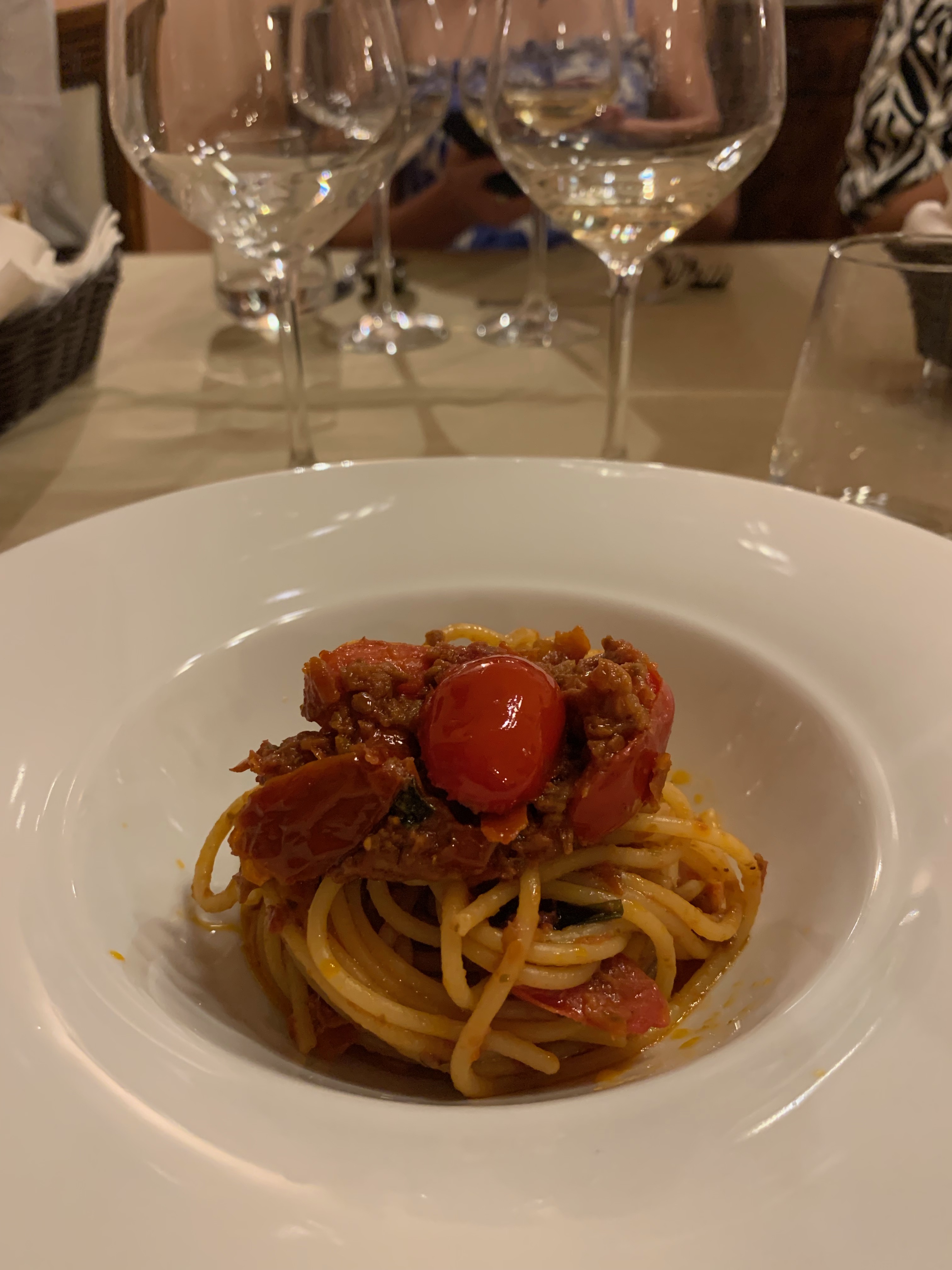
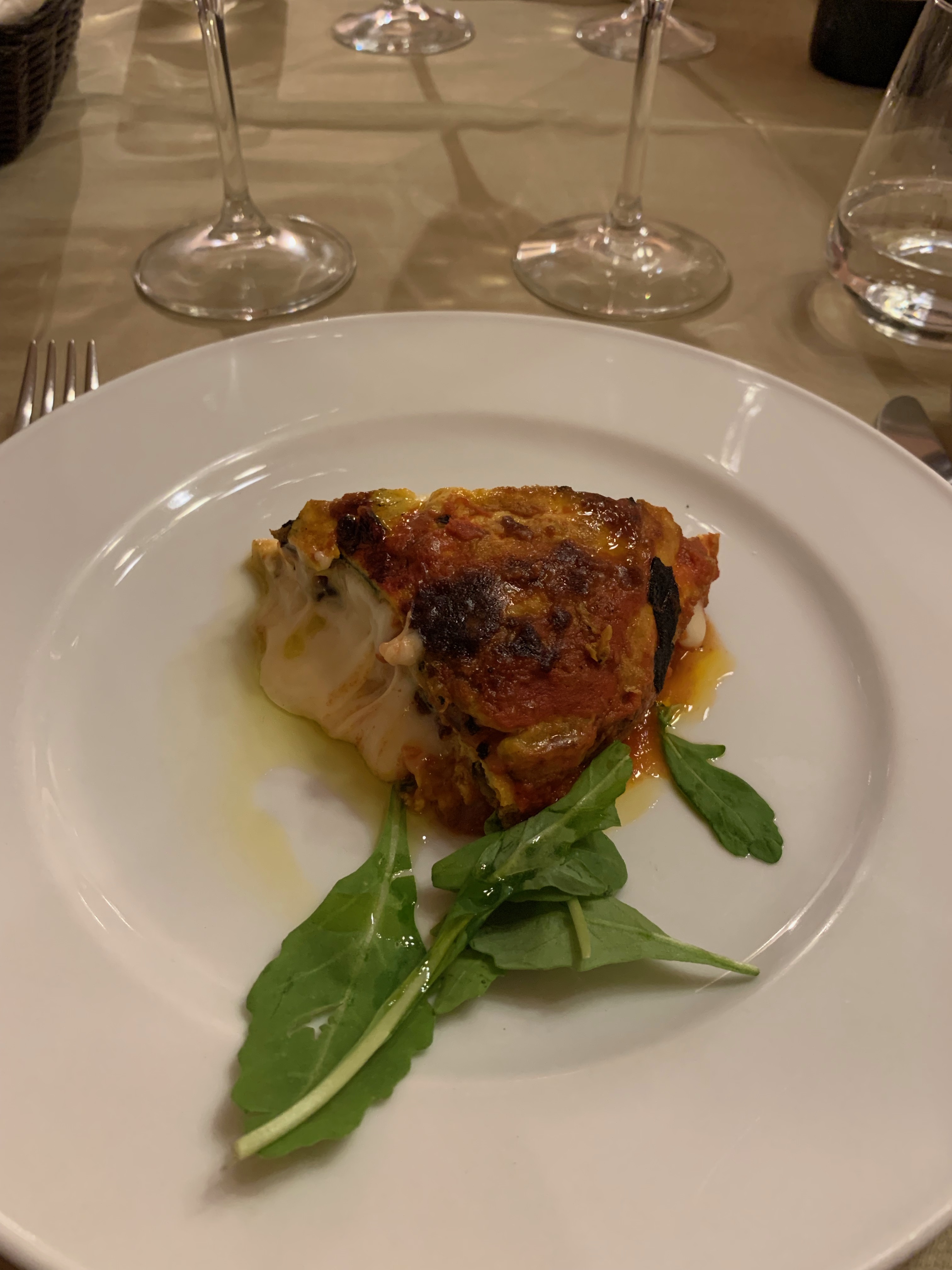
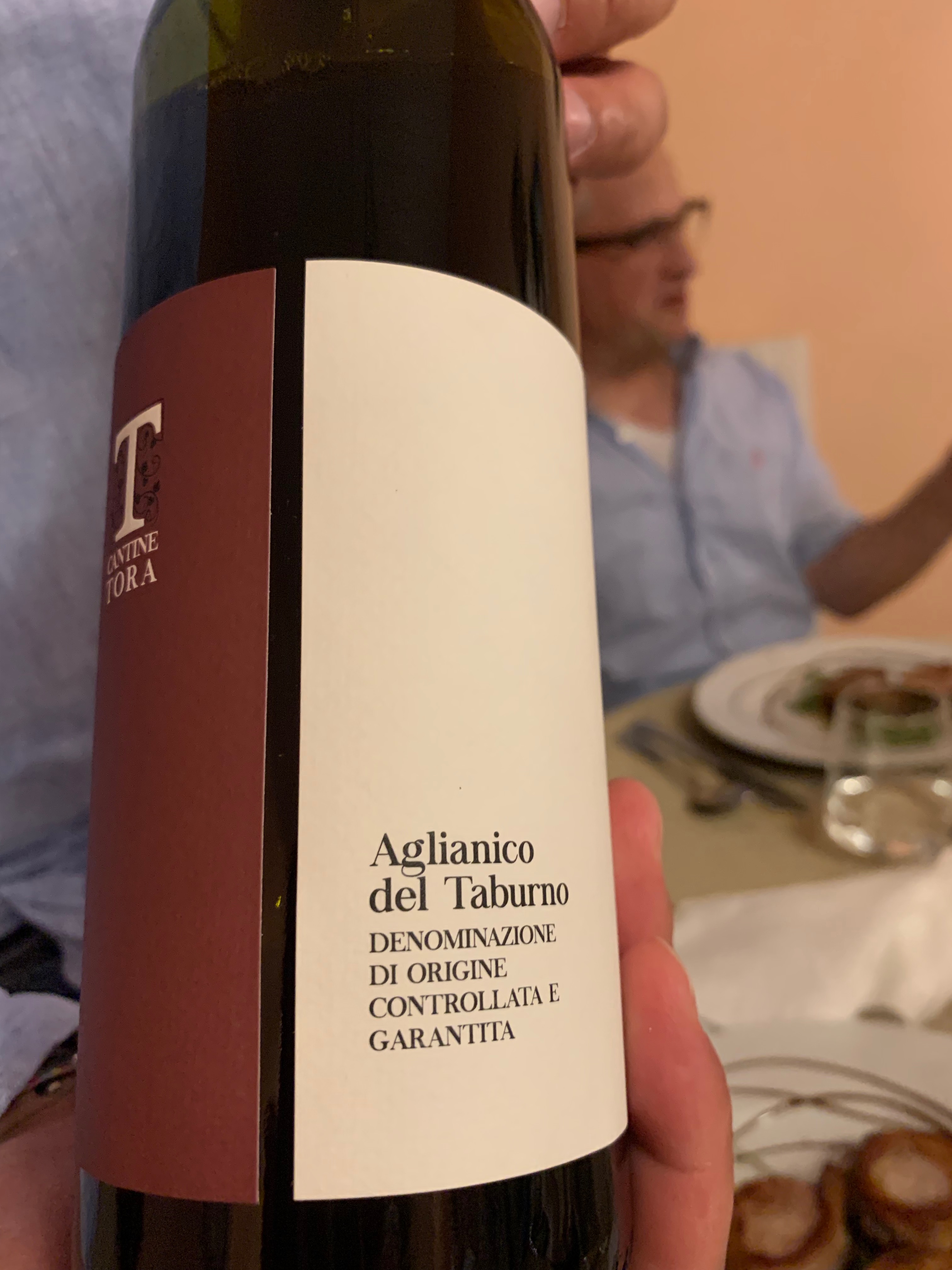
And when the heavy-hitting red of the region, Aglianico del Taburno, is paired with the bounty of the land, well, you truly understand the meaning of Campania Felix!

Journalists hard at work…
More to come on this exciting food&wine journey…


 Suzanne Branciforte's Italian Grapevine
Leave a comment